Pensive
Quentin Stafford-Fraser's blog
One should always have something sensational to read on the net...
Today's inspired thought is from the economist Charles Goodhart. Goodhart's law states that:
When a measure becomes a target, it ceases to be a good measure.
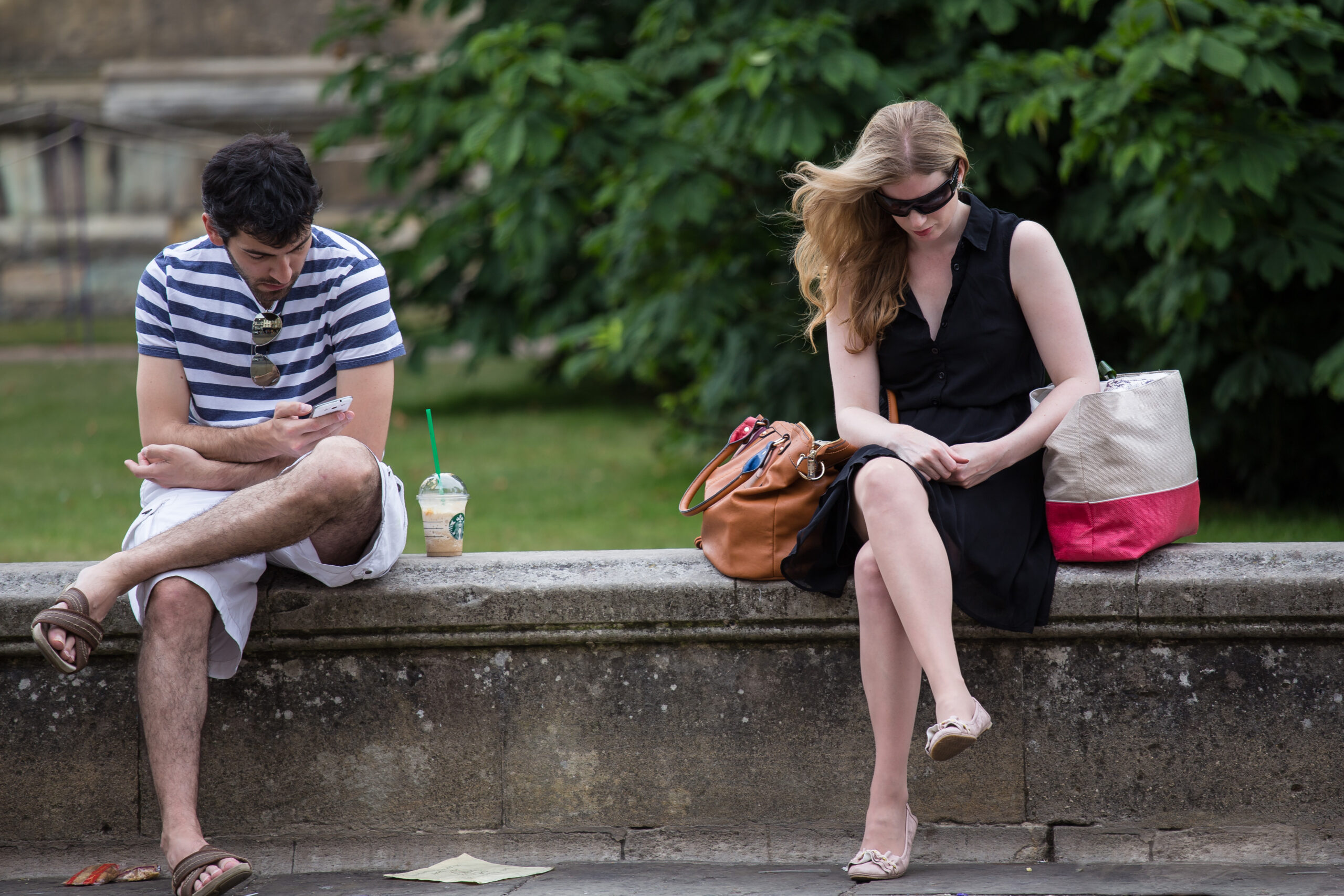
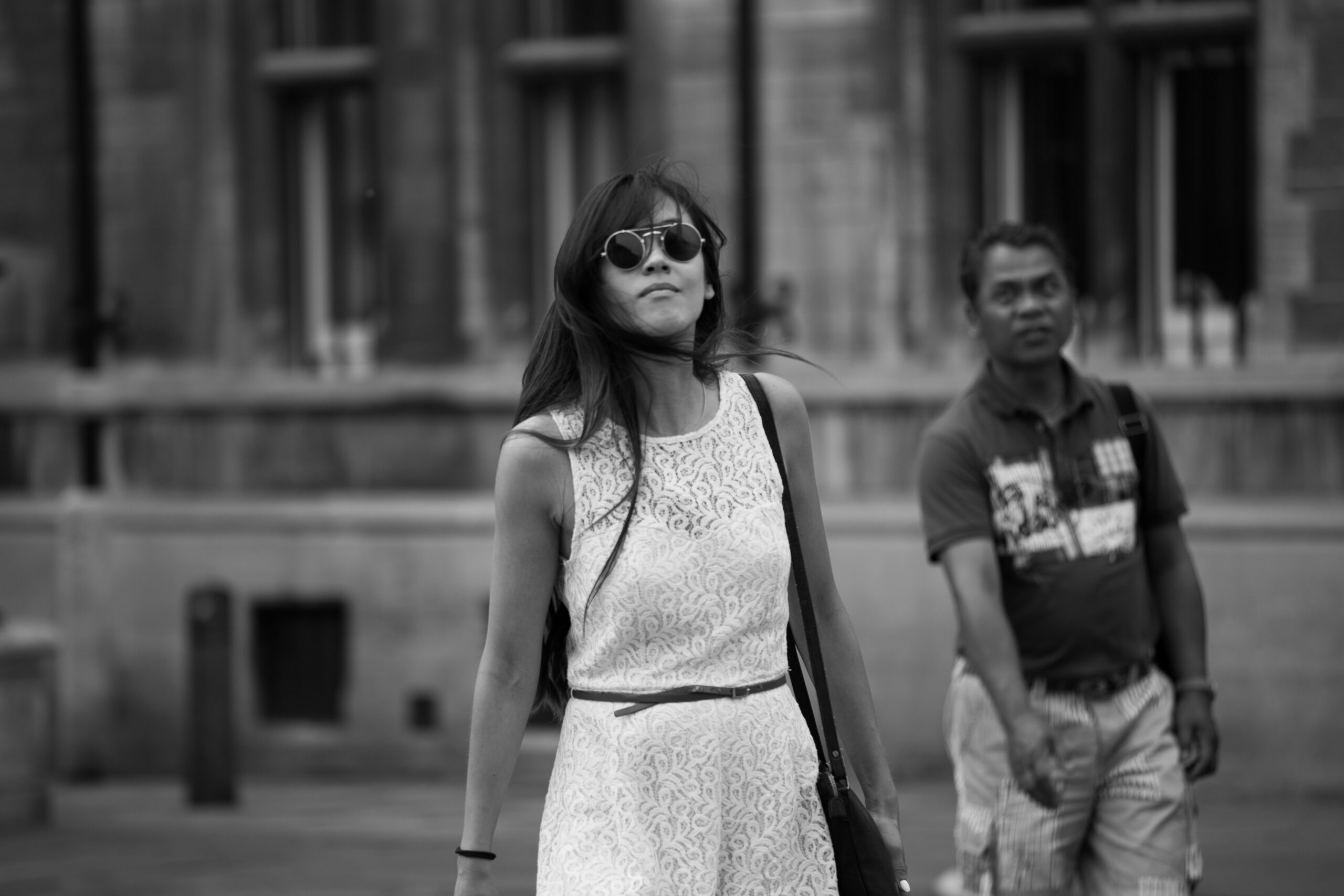
I had fun taking some street photos in Cambridge earlier this evening. It was mainly an excuse to play with a new lens.
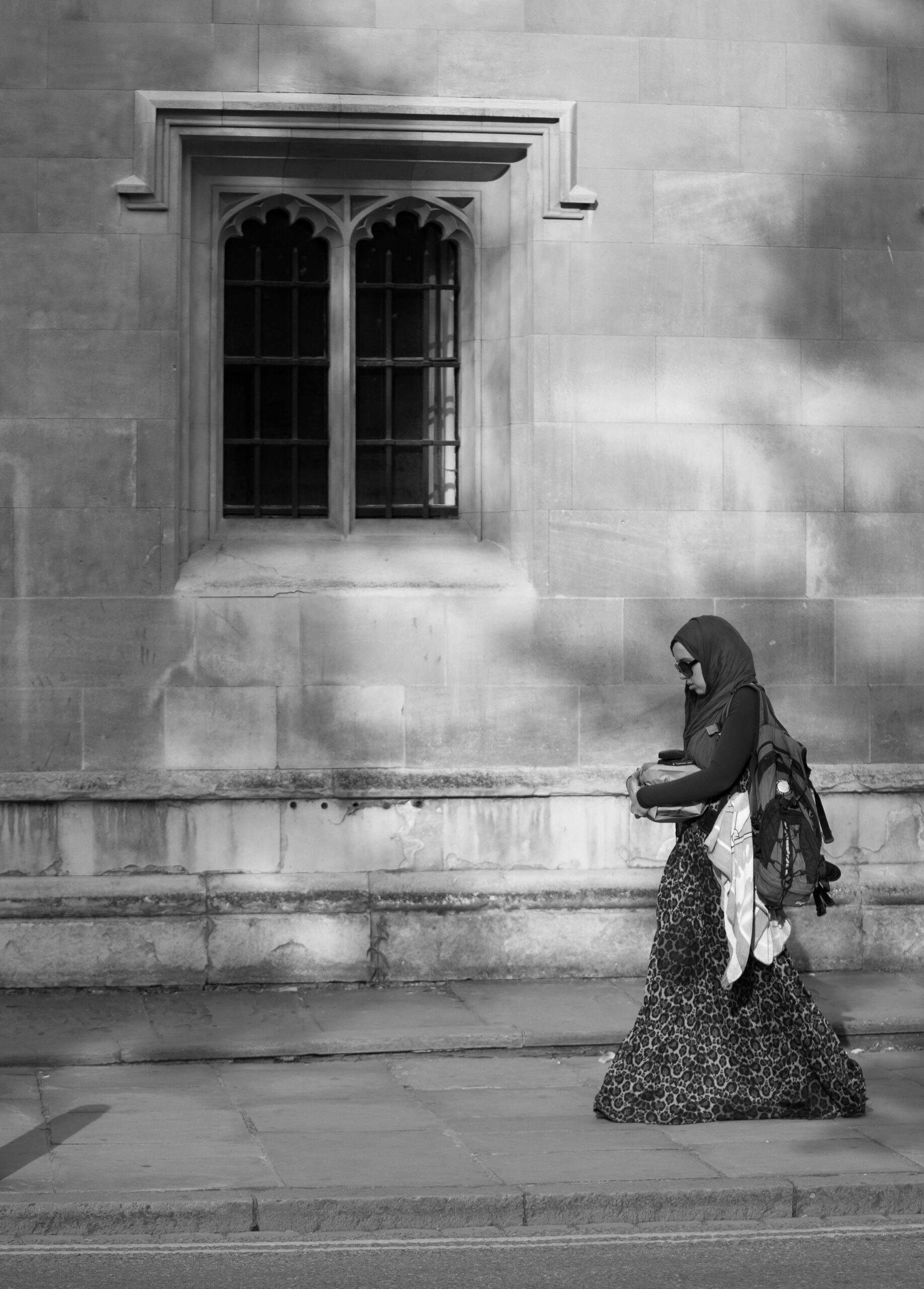
I’ll post some more of them here later, or you can check them out on Flickr.
This is one of those 'just in case anyone is Googling for it' posts. Non-Photoshop users can skip...
My shiny new copy of Adobe Photoshop CS6 suddenly started crashing after just a few uses. On startup, it would display a blank dialog with only a 'Participate' button, which didn't work.
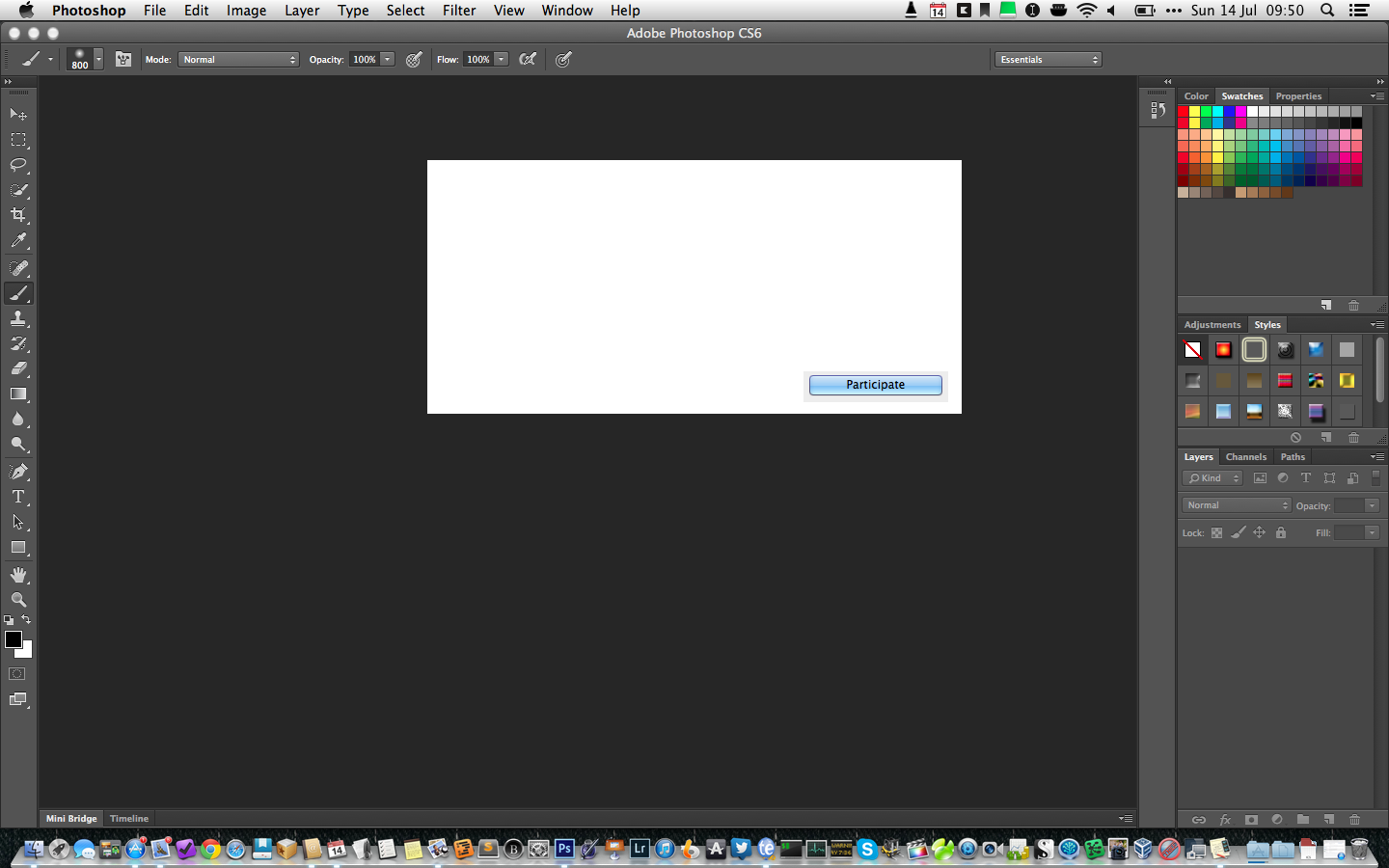
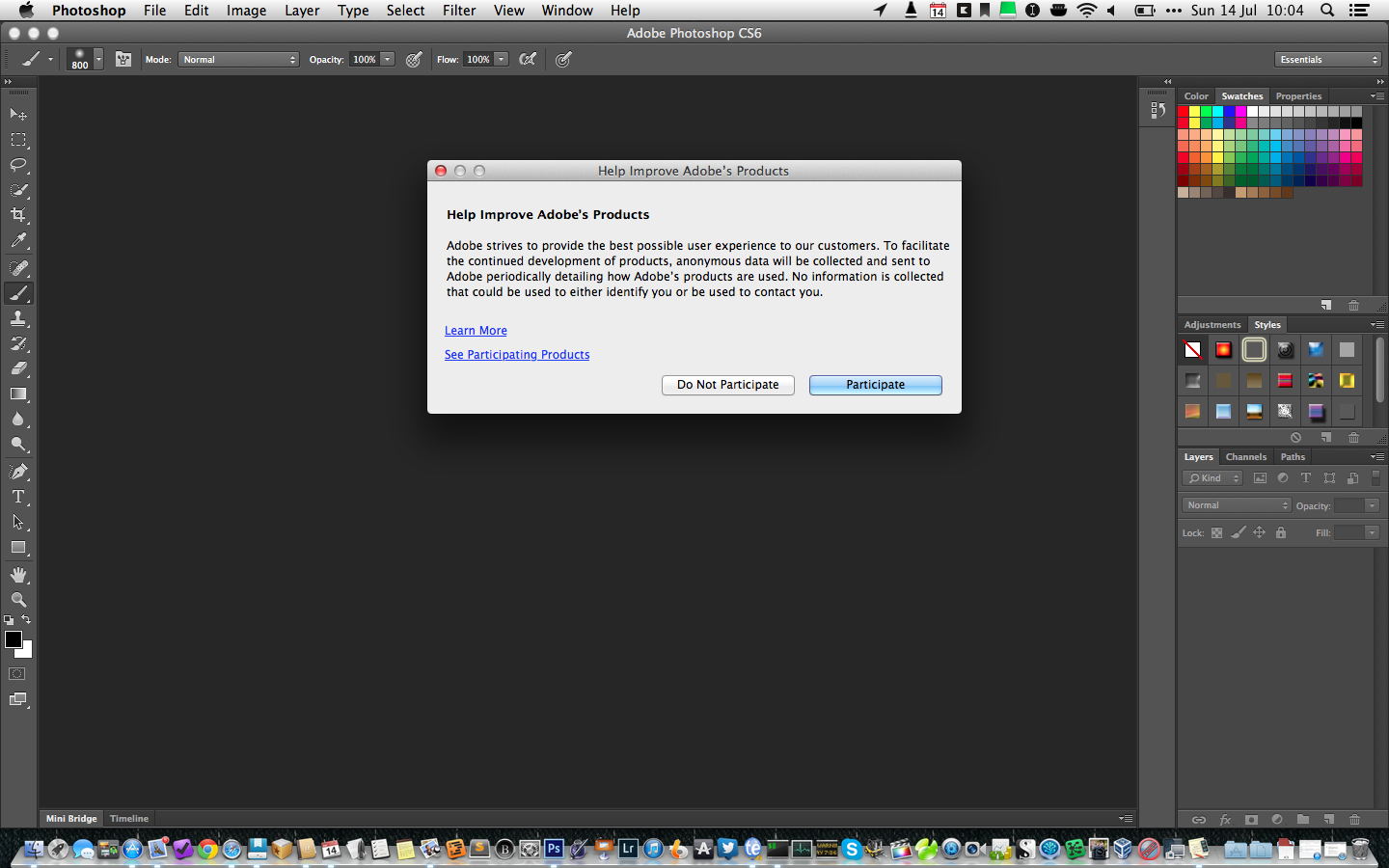
I trawled the web and found that I was far from being the only person with this problem. I discovered that, somewhat ironically, this is supposed to be a window inviting you to sign up to Adobe's 'Product Improvement Program'. Mmmm. And a suggestion that the problem is a second dialog which appears behind the first so neither can be clicked. But I didn't find a direct solution I could use.
However, a post by Chris Cox in this thread mentioned a Preferences file which might affect it. It'll be named something like:
~/Library/Preferences/ByHost/com.adobe.headlights.XXX.plist
where XXX will vary depending on your installation. ~/Library, in case you don't know, is the Library folder within your home folder. This is hidden by default in the Finder, but if you hold the option key down and select the 'Go' menu, you can select Library from there.
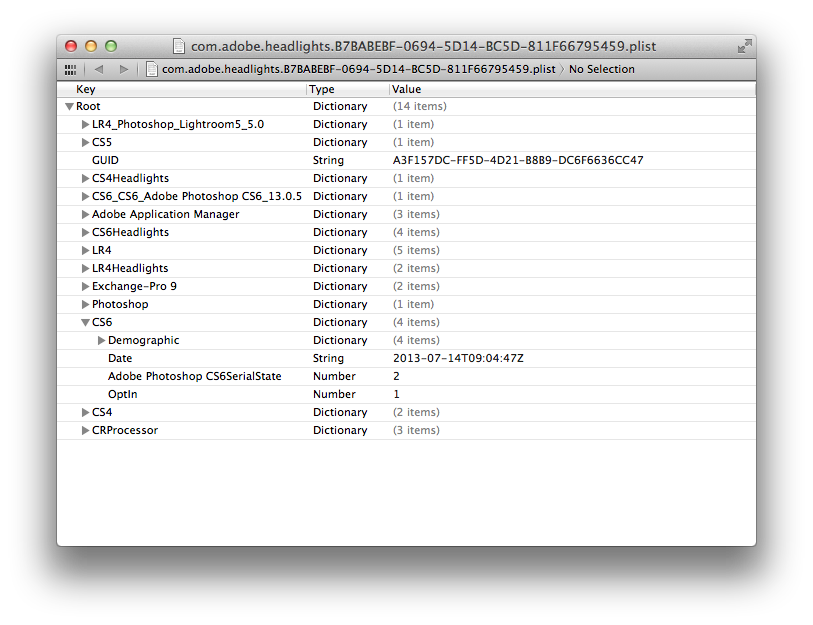
Anyway, open that file with a property list editor. I used XCode, but something like PrefSetter should work too. I burrowed into CS6Headlights > Adobe Photoshop CS6 where there was a 'LaunchCounter' variable. I'm guessing this is something to do with the number of times you can run the app before they ask you to participate.
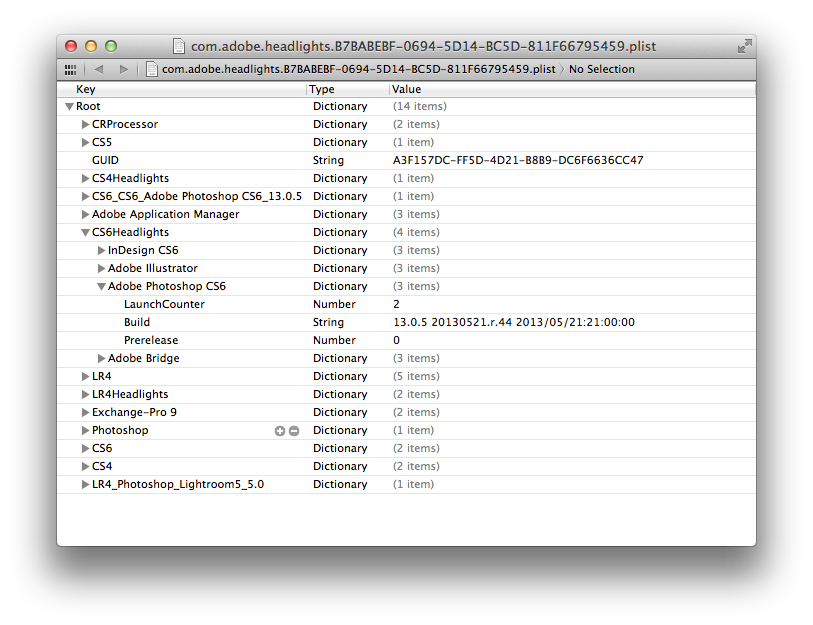
But setting it to a lower number (I think I went from 5 to 2), saving and quitting XCode and then starting Photoshop brought my world back to life. I was then able to go the the Help menu where you can set your Product Improvement Program options.
After doing that, various bits of information were also stored in the .plist file under 'CS6' about my opting in or out, so if the above fix doesn't work you might like to investigate those.
Hope this helps others out if they find themselves in the same state!
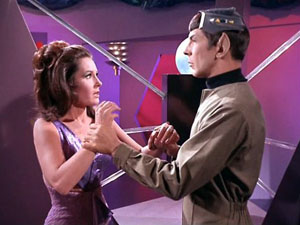 The aliens want to steal your brain... I think that's fairly well established by now, but how to recognise them is less certain. Douglas Adam fans would assert that it's the white mice you should be fearful of, while the followers of Roddenberry are more concerned about the delicious young ladies of Sigma Draconis VI.
In either case, it's best to be prepared for all eventualities, and what better way than to have a spare brain you can hand over when requested? With a bit of luck, the aliens will be content with that, and leave you to boldly go about your other business.
My friend Richard has already got his. Here's how he did it.
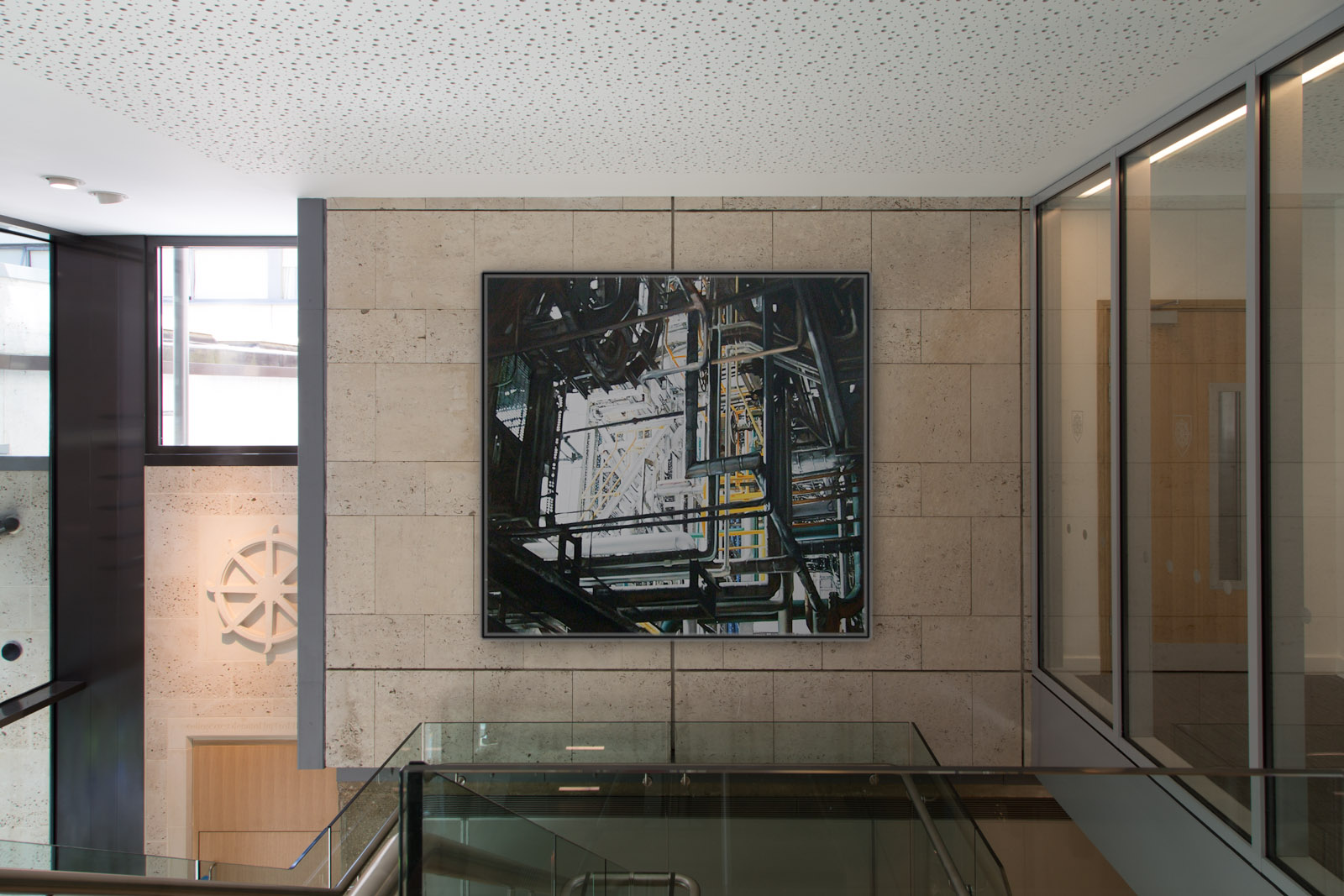
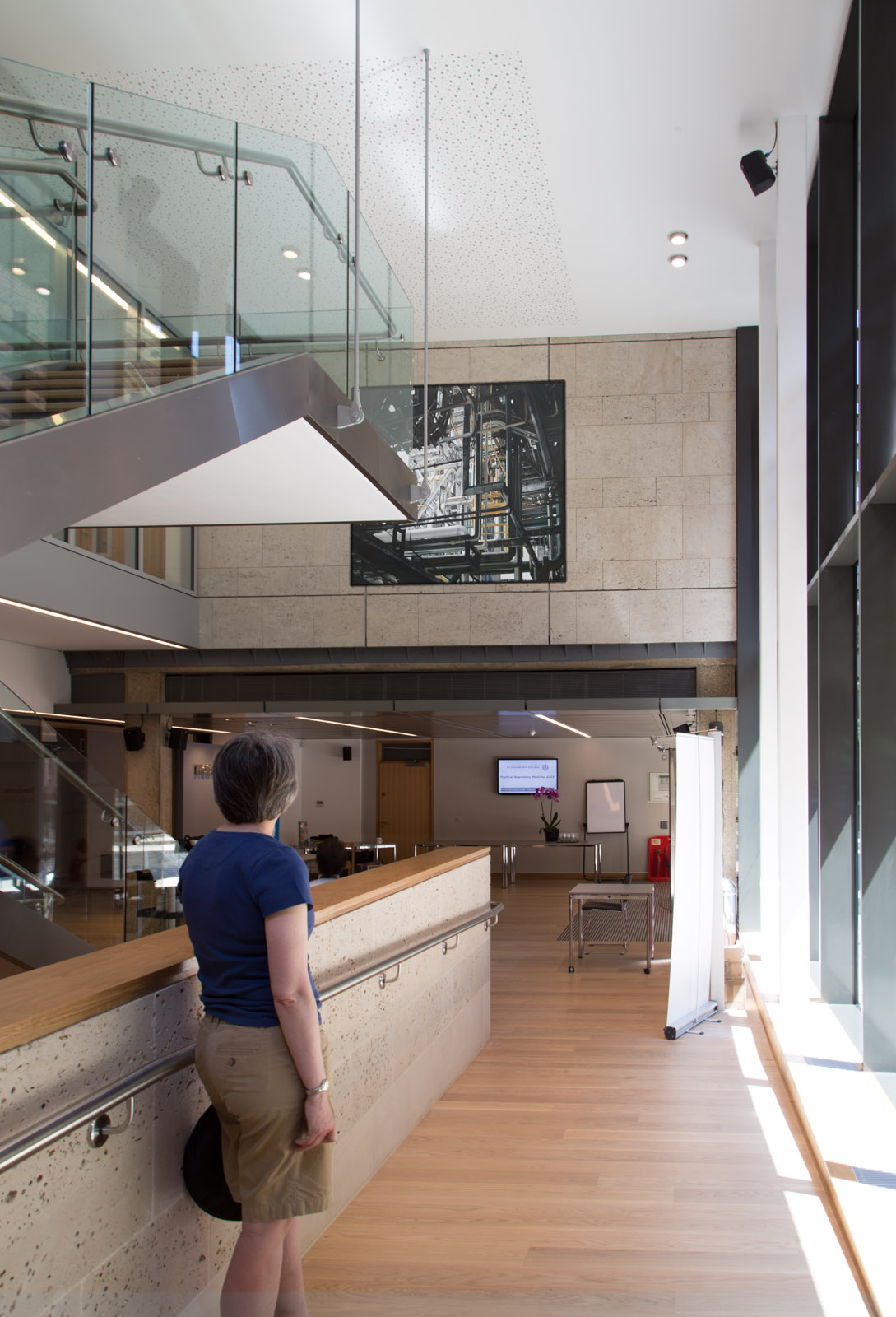
My Photoshop skills are a bit rusty, but I revived them over the weekend for a quick job on behalf of Rose's college. They have been contemplating the possible hanging of a large painting in a couple of new locations, and wanted to get a feel for how it might appear.
The painting, however, is over 2m square and currently in storage, so just holding it up for a moment while someone else gives their opinion would have been a little impractical. So I offered to do a quick non-artist's impression.
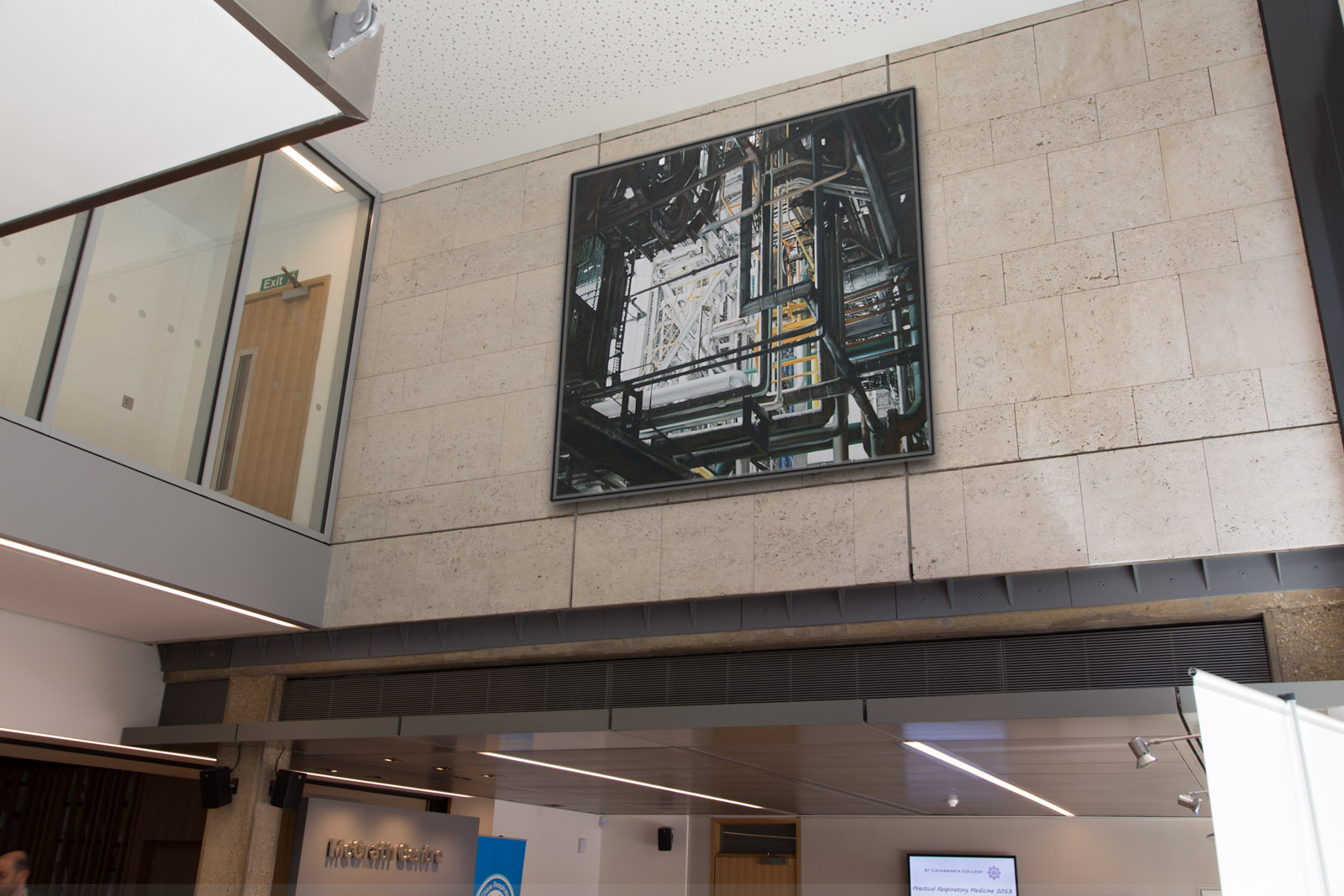
Isn't technology wonderful?
Over the last few weeks and months I've been trying to improve my understanding of flash photography. We're all so used to seeing the bad photos from little on-camera pop-up flashes -- you know, the ones that make otherwise pretty party-goers look like a zombie reunion -- that it's tempting to forego flash altogether and rely only on natural light. Doesn't the sensitivity of today's cameras mean that flash is almost redundant?
And yet, I was also aware that many professionals make extensive use of flash, in studio settings, of course, but also for weddings, portraiture and other types of photography where you can take the time not just to capture what's in front of your lens, but to sculpt the light to your needs. Unless you're after a particular effect, the trick is to use a flash without it being too obvious you're using a flash! This was one of my early experiments, and one of the rare occasions I managed to get Rose to pose for a photo! (You can click the images for larger versions).
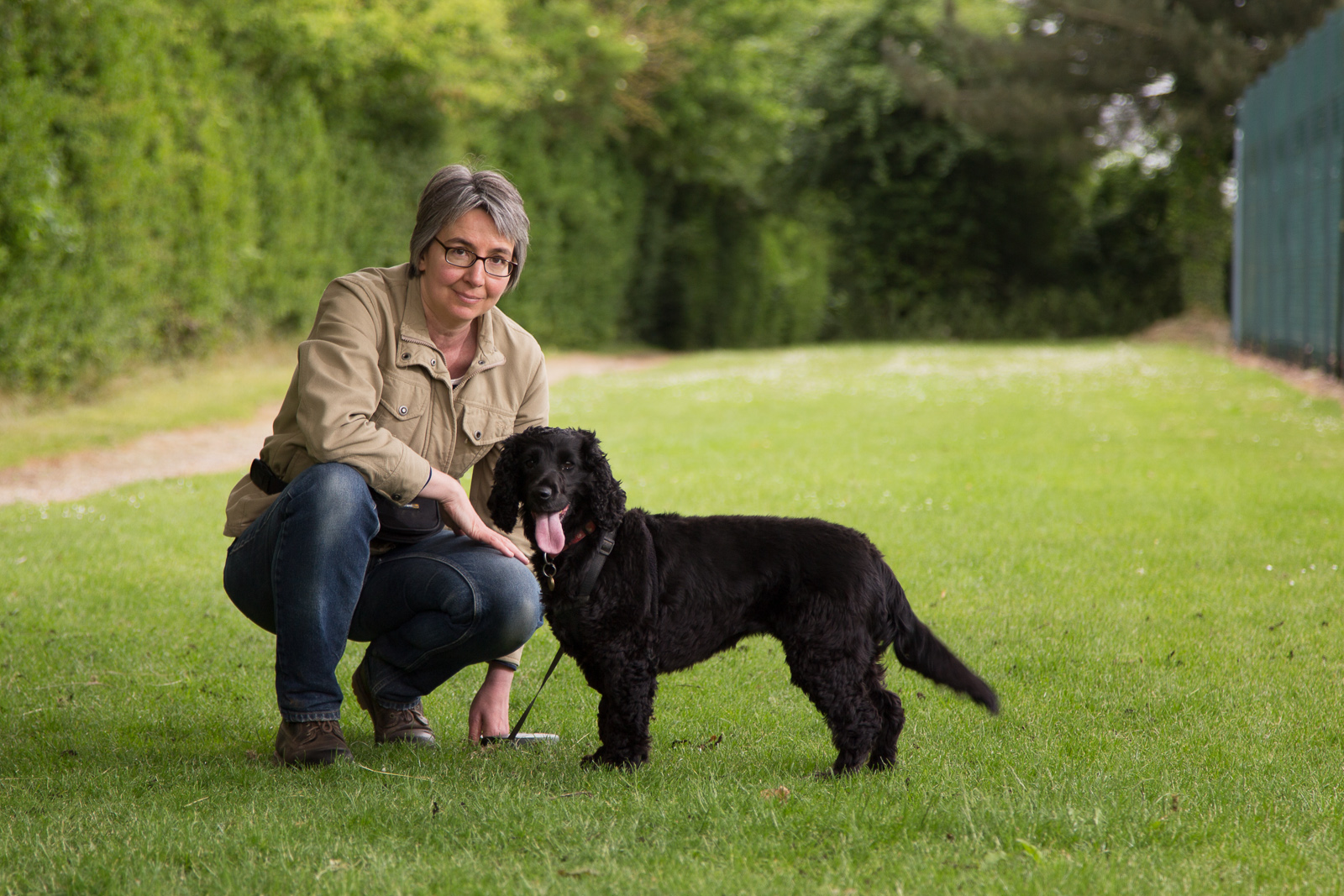
The flash was wedged into the fence on the right-hand side and triggered by radio from the camera.
Now, why use flash outside on a reasonably sunny morning? Well, I can put the subjects in the shade under a tree, which makes them stand out from the surroundings a bit more. I can have a nice sunlit background without them having to squint into the sun. And I can add a little more in the way of contours in an otherwise rather flat light. There are many ways this shot could be improved, but it's a start, and the key realisation for me was that I couldn't have got it with unmodified natural light alone.
However, I needed to experiment more with some of my other equipment, so I had to find a subject who didn't mind spending some time in front of the camera. Fortunately, I was able to draw on the services of Richard's daughter Iris, who obligingly lay on the floor with some brightly-coloured toys and occasionally waved her legs in the air, while I pointed bright flashy things at her. Richard captured a nice image of our improvised studio.
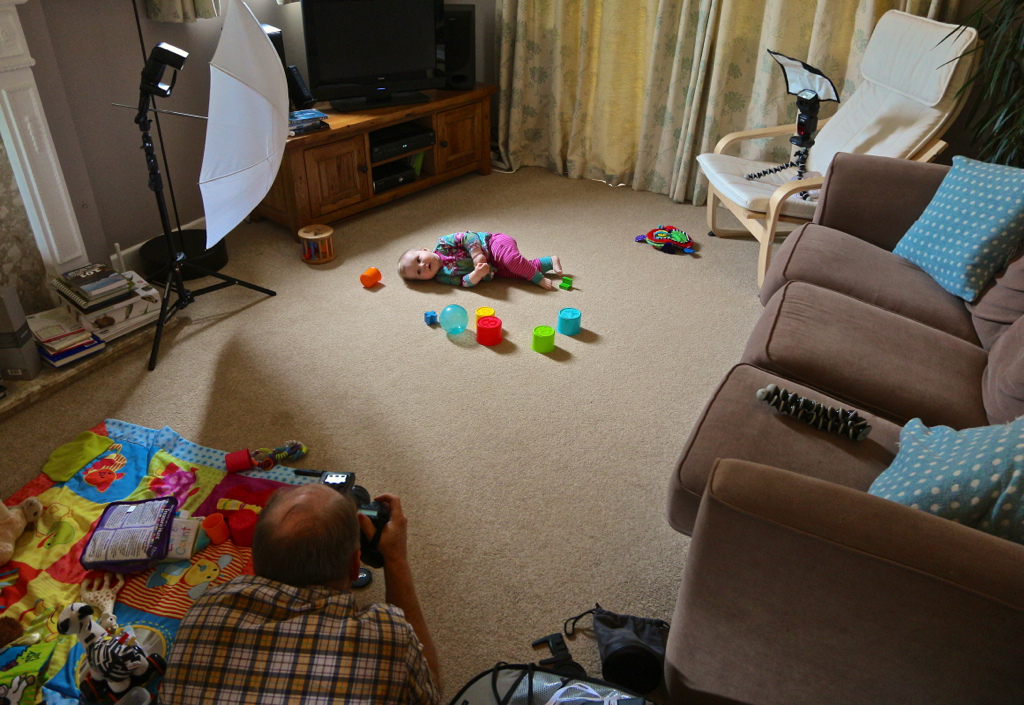
Iris was a delightful subject, and we got some nice shots.
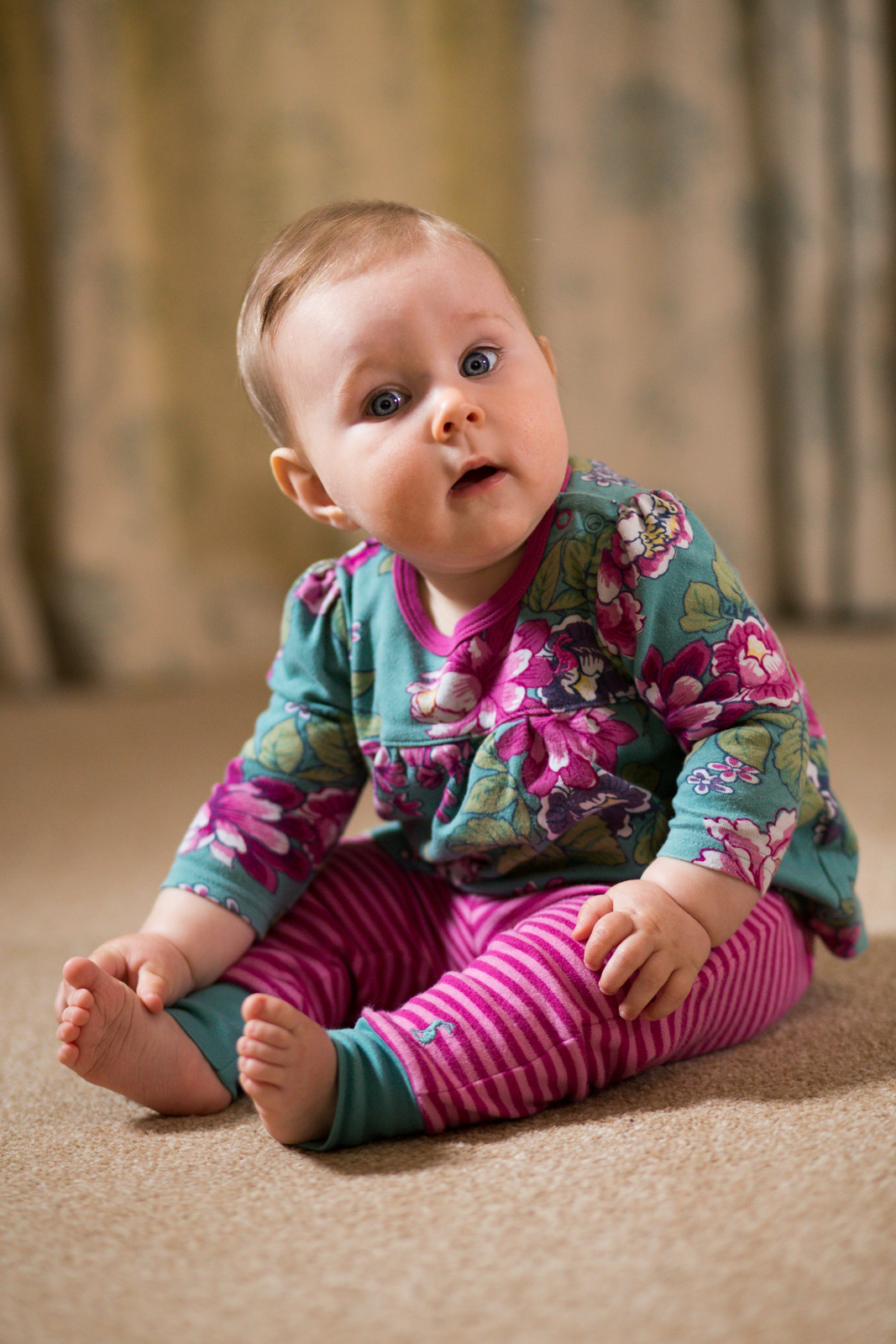
I need to start pestering some of my other nearby friends to see if anyone else fancies a portrait session!
If you're also interested in playing with this kind of thing and have Canon equipment, I strongly recommend that you throw away the manuals that came with your flashgun and get Syl Arena's Speedlighter's Handbook, which definitely deserves its Amazon ratings.