Tree-herd
Tilly and I were walking in the woods yesterday. We passed an Ent, who turned and watched as we went by.

Quentin Stafford-Fraser's blog
One should always have something sensational to read on the net...
Tilly and I were walking in the woods yesterday. We passed an Ent, who turned and watched as we went by.
Just because we don't have children, that shouldn't stop us playing with toys, right? In fact, one of the benefits of our decision not to have children is that we arguably get to play with more toys. Yesterday, anyway, I tried one of these:
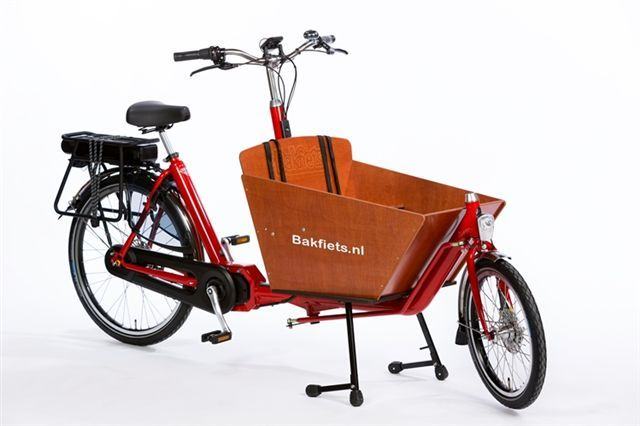
It's an electrically-assisted cargo bike, which you could use for transporting the kids to and from school, if that's your thing. But we were more interested in transporting groceries or spaniels around, while still avoiding parking & congestion issues, and making use of cycle paths and pedestrian bridges. The electric motor allows you to do so with no more effort than cycling a normal bike, regardless of hills, wind or weather.
It's a splendid vehicle. Tilly was nervous at first, but seemed to enjoy sitting in it once we were zooming along a straight road at 15mph, with our ears flapping in the breeze, and we got lots of cheery comments from those we passed. Will have to come up with a good excuse to get one...
If you're curious, it's a Bakfiets Classic Short with Shimano Steps Electric Assist, model NN7STEPS, and it's available, for example, from here. Not cheap in bicycle terms, but not bad when compared to a car, especially when you think of all the maintenance and tax savings...
One of the things that has always intrigued me about Elon Musk is that he's not really a great speaker.
Most people who are leading the types of operations he's leading, having the impact he's having, are very confident, eloquent orators. Elon, in contrast, has these wonderful world-changing ideas and yet bumbles on about them in the sort of way that, perhaps, you or I might do. I think that's part of what makes him so attractive. He feels like, well, one of us, but with just a bit more confidence in his gut feelings. Oh, and a few more billion dollars, but that isn't the thing you notice most.
That's not to say that his words, stumbling though they sometimes are, don't have real nuggets of gold in them. It's well worth watching this TED talk where Chris Anderson asks about his various projects, though with too little time to go into any one in any depth, alas. It's all intriguing stuff, but the best bit is at the end:
Chris Anderson:
Elon, it almost seems, listening to you and looking at the different things you've done, that you've got this unique double motivation on everything that I find so interesting. One is this desire to work for humanity's long-term good. The other is the desire to do something exciting. And often it feels like you feel like you need the one to drive the other. With Tesla, you want to have sustainable energy, so you made these super sexy, exciting cars to do it. Solar energy, we need to get there, so we need to make these beautiful roofs. We haven't even spoken about your newest thing, which we don't have time to do, but you want to save humanity from bad AI, and so you're going to create this really cool brain-machine interface to give us all infinite memory and telepathy and so forth. And on Mars, it feels like what you're saying is, yeah, we need to save humanity and have a backup plan, but also we need to inspire humanity, and this is a way to inspire.
Elon Musk:
I think the value of beauty and inspiration is very much underrated, no question. But I want to be clear. I'm not trying to be anyone's saviour. That is not the... I'm just trying to think about the future and not be sad.
I've written before about Hanlon's Razor -- one of my favourite aphorisms -- but I realise that it was 16 years ago, so perhaps I can be forgiven for returning to it!
It is quoted in various forms and attributed to various people, but the version I heard originally was:
Never attribute to malice that which is adequately explained by stupidity.
Worth repeating to oneself on a regular basis, I find.
On the topic of quotations, though, a longer recent discussion about Hanlon's Razor on the Farnam Street blog includes this rather nice one from the German general Kurt von Hammerstein-Equord:
I divide my officers into four groups. There are clever, diligent, stupid, and lazy officers. Usually two characteristics are combined. Some are clever and diligent – their place is the General Staff. The next lot are stupid and lazy – they make up 90 percent of every army and are suited to routine duties. Anyone who is both clever and lazy is qualified for the highest leadership duties, because he possesses the intellectual clarity and the composure necessary for difficult decisions. One must beware of anyone who is stupid and diligent – he must not be entrusted with any responsibility because he will always cause only mischief.
I've always said that I am politically challenged, and that anybody who expects me to be politically correct is therefore guilty of serious discrimination, at which I am likely to take offence. :-)
The political correctness pendulum has clearly swung too far over the last few years, and is now an appropriate target for ridicule. John Cleese rather nicely explains why.
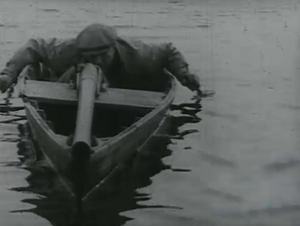
Friends in the Cambridge area, or with an interest in its history, may enjoy this short 1947 informational film, Draining the Fens, at the East Anglian Film Archive.
Now, I'll grant you, that doesn't sound like the most gripping movie title, but this one is only nine minutes long, and if you've ever driven across the East Anglian countryside pondering the networks of rivers and drainage dykes, this explains how they came to be, and what can happen when they go wrong.
(The audio is a bit dodgy at the start, but improves.)
This one is from Sam Altman:
The hard part of standing on an exponential curve is: when you look backwards, it looks flat, and when you look forward, it looks vertical. And it's very hard to calibrate how much you are moving because it always looks the same.
At last! Today, I finally managed to leave the ranks of those who have never commuted to work on an electric unicycle.
Not sure I'll make a habit of this mode of transport, especially since, as John points out, it is technically illegal here, but it's a thing one should have done at some point in one's life, I'm sure you'll agree.

Penshurst Place, Kent
In my research group in the computer lab at Cambridge University, we have a few fun toys. This is one of them: an electric unicycle; there are a few different makes of these now, this one is a Ninebot One.
I'm not very good at it yet, but it's great fun to learn - this is after I've been having quick goes on it occasionally for the last year or so.
It's more fun outside. They'll go to nearly 20 miles per hour. Haven't been that brave yet...