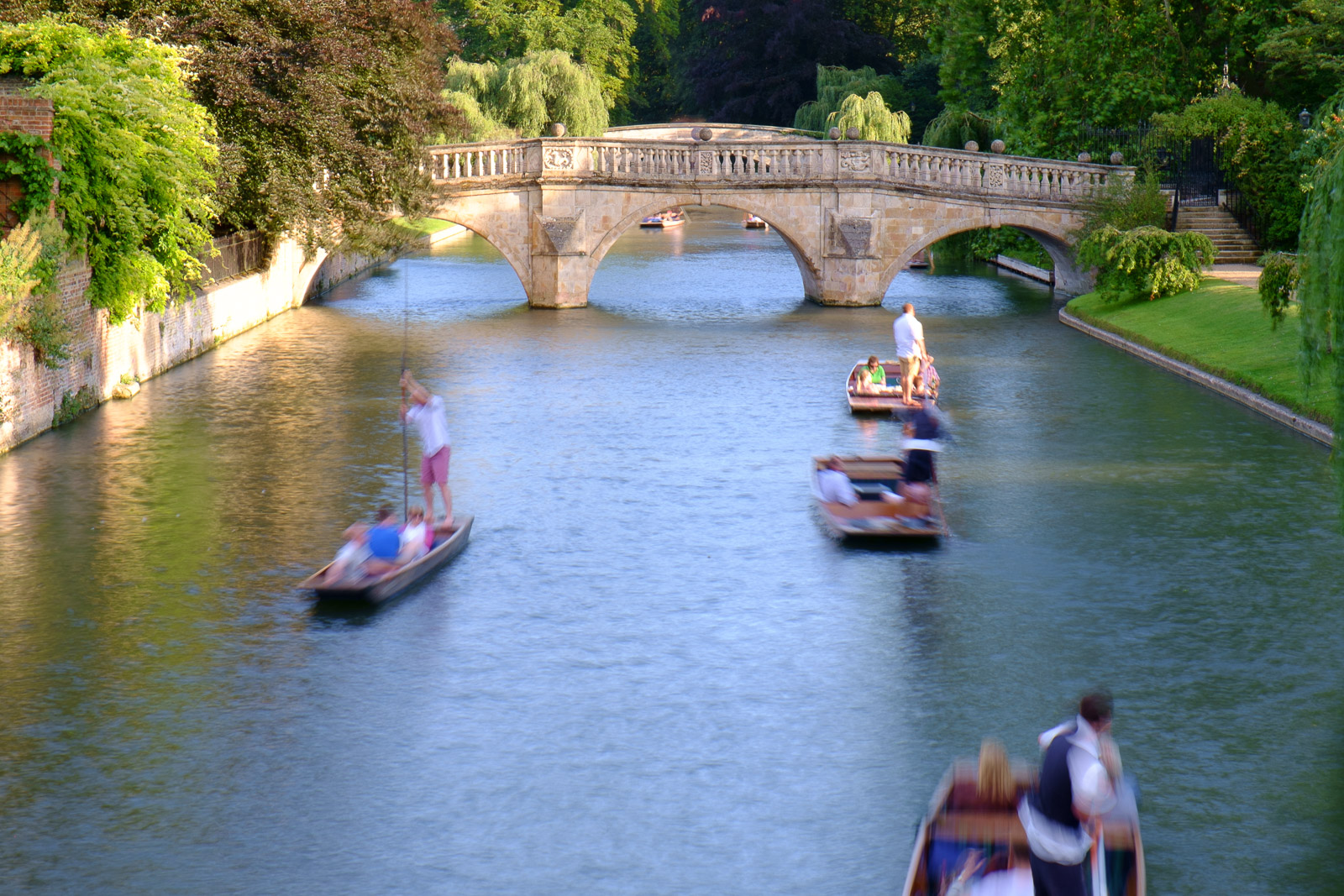
Free-range chicken
We thought these were more adventurous than your average hen.

Then we realised they were just trying to impress the Lord of the Manor.

Quentin Stafford-Fraser's blog
One should always have something sensational to read on the net...
We thought these were more adventurous than your average hen.
Then we realised they were just trying to impress the Lord of the Manor.

Grasmere, from Helm Crag, this evening. It's good to be back.
Click photo for larger version.

The Chapel, Gonville and Caius College, Cambridge.
I have a sentimental attachment to this place, because I got married here nearly 24 years ago. At that time, it was beautifully lit with candles. But I have to admit that, most of the rest of the time, the dark oak and limited light makes it rather gloomy. It takes some careful photography to do it justice by natural light.
Click image for a larger version.
If you enjoyed Andy Weir's book, The Martian, anything like as much as I did, then you'll certainly enjoy this splendid hour-long interview with him. (If, for some reason, you haven't yet read it or listened to the audiobook, you should probably save this until you've done so.)
 A couple of months ago, at my local Shell petrol station, I noticed they had installed big QR codes by the pumps. Interesting. Inside the store, I found leaflets telling me about Fill Up & Go, their new payment option: you can just scan the code at the pump using their app, and then fill up, confirm the transaction on your phone and drive away: it's billed to your Paypal account.
Excellent. I'm a big fan of anything that moves us towards electronic payments, and a big user of Paypal, and this sounded rather fun, so I took a leaflet, went home and downloaded the app. But I couldn't find anything at all relating to QR codes or to Paypal. Strange. So I filled in a support query and sent it off. Sigh.
It was a little over a week before I got a standard canned email reply, which said that it would be available through their app 'later this year'. So why are they installing QR codes and giving out leaflets now? Who knows? But, "We are really excited to be offering this innovation to our customers, beginning with you." Mmm, yes.
The message did, however, say it was currently available through the Paypal app. Ah! OK. So I went and looked at that more carefully. Errm... no. Sorry. Nothing there either. Sigh again.
So I gave up. Well, almost. I didn't actually get around to deleting the app from my phone. And so it was that this last week, a notification popped up saying that Fill Up & Go was now available! Hurrah! OK - I fired up the app again, filled in my Paypal details, chose a PIN... and then it died with an error. Sigh yet again.
A few days passed, and then another notification from the app popped up. This one apologised for the problems some users had experienced setting up their payments, and said things had now been fixed. "Finally!", I thought, and went back in and successfully set up the Paypal account. Things were looking better. It confirmed the connection. It let me set a PIN. It even told me that my friendly local station was the nearest place I could use it. Great!
So I drove around the corner, pulled up at the pump, pulled out my phone, turned to look at the sign, and what did I see? The QR codes had been removed and replaced with a 'Coming soon' message. Sigh. This was starting to become farcical.
Today, however, I had some time to spare, and was passing a different Shell station, where I knew they had QR codes. At last. My chance to experience the future. I turned in. Waited only a brief period for the pump to be free. Pulled up. Fired up the app. Scanned the QR code... and got a message. "Problem connecting with that Paypal wallet. Please pay in the store." I drove off. Sighing.
I got home, and looked at their website... where they have a nice map that still shows my local QR-free garage as one of the places you can use it.
Now, Shell, since you are so determined to refuse my attempts to give you money, can we try the other way around? My team and I could keep using you as an object lesson in 'how not to do it', or we could offer you some very nice consulting for a very reasonable price...
In the meantime, here's some free advice. Just install Apple Pay. It works.
A fun and inspiring TED talk by John Green.
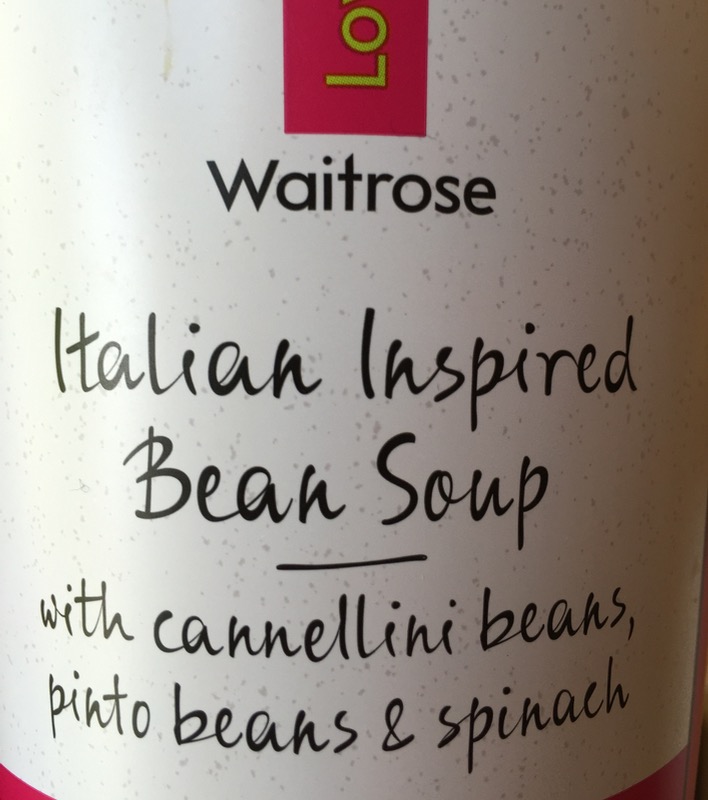
Is it cruel of the Italians to make soup from inspired beans?
Or were the beans inspired by Italians before they were turned into soup?
Is the soup, itself, perchance, inspired? In which case, I must be heartless to consume something so sentient.
Here are a couple of menu-bar apps I run on all my Macs:
Keyboard Maestro is a quirky and exceedingly useful utility. It's a bit like Automator, but with a whole range of different capabilities. At its simplest, it responds to an event (like a particular key combination) and executes a set of actions (like, say, opening an app and moving its window to the top-right quarter of the screen).
But it can do more complex operations. Sometimes, for example, I have apps that respond to particular hot-keys, but only if they're running; I can use Keyboard Maestro to detect the keystroke, and if the app isn't currently open, it'll fire it up and then send the keystroke on to it, or choose the equivalent option from its menus. More about keyboard shortcuts later.
A set of actions can be triggered by more than just keystrokes, too. You can have them run when:
Its one of those utilities that will be used in a different way by almost everyone who installs it. Here are some of my most-used triggers:
Karabiner used to go under the snappy name of KeyRemap4MacBook, which was horrible, but at least somewhat descriptive! This little utility is even more quirky than Keyboard Maestro, and has a rather poor user interface, but it's one of those things that, once you've set it up, does its job reliably and predictably, so you seldom need to touch it again.
It lets you remap your keyboard in various ways, and, despite its previous name, works on much more than just MacBooks. You can do very powerful things with this, especially if you want to go as far as customising bits of XML configuration, but normally you'll just want to pick from a few of the standard options.
It's really useful if you switch between different keyboards and want, say, to make the PC-style keyboard in the office work more like the Mac keyboard at home, or the other way around. I have Apple keyboards everywhere, so this is less of an issue, but I use it for just two things:
I have a few global keyboard shortcuts that I use all the time, like the one mentioned above to open my journal, and another to create an item in my to-do list. I don't want these to be buried under two many modifier keys (shift-ctrl-T), but I also don't want them to clash with keyboard shortcuts used by my apps: I want them to work the same everywhere.
The secret is to create a new modifier key, sometimes called 'Hyper', which nothing else uses! I forget who came up with this idea originally, but the trick is to map, say, your Function (fn) key to produce Shift-Ctrl-Alt-Command, which no app ever uses for its shortcuts because it's too much of a pain to type. Karabiner has a setting to do precisely this, without affecting The normal use of Fn when pressed with, say, the function keys. The, by setting my hotkeys in things like Keyboard Maestro to things like Fn-J (which it interprets as Shift-Ctrl-Alt-Cmd-J), I can just type Fn-T to create To-do items, Fn-J to create journal entries, Fn-D for my diary, and so forth, and I know that they work anywhere on my system.
I have UK keyboards, which I prefer to US ones, except that they have a £ when you type shift-3. I'm a programmer, and not a wealthy one, which means I need a '#' far more often than I need a '£'. This does involve a short bit of XML: you just need to follow these instructions and paste in the code below, after which you'll have an option called 'Swap £ and # on UK keyboard'.
I hope others find those useful too!
<?xml version="1.0"?>
<root>
    <list>
        <item>
            <name>Swap £ and # on UK keyboard</name>
            <identifier>private.swap_pound_and_hash</identifier>
            <autogen>--KeyToKey-- KeyCode::KEY_3, ModifierFlag::SHIFT_L, KeyCode::KEY_3, ModifierFlag::OPTION_L</autogen>
            <autogen>--KeyToKey-- KeyCode::KEY_3, ModifierFlag::OPTION_L, KeyCode::KEY_3, ModifierFlag::SHIFT_L</autogen>
        </item>
    </list>

</root>
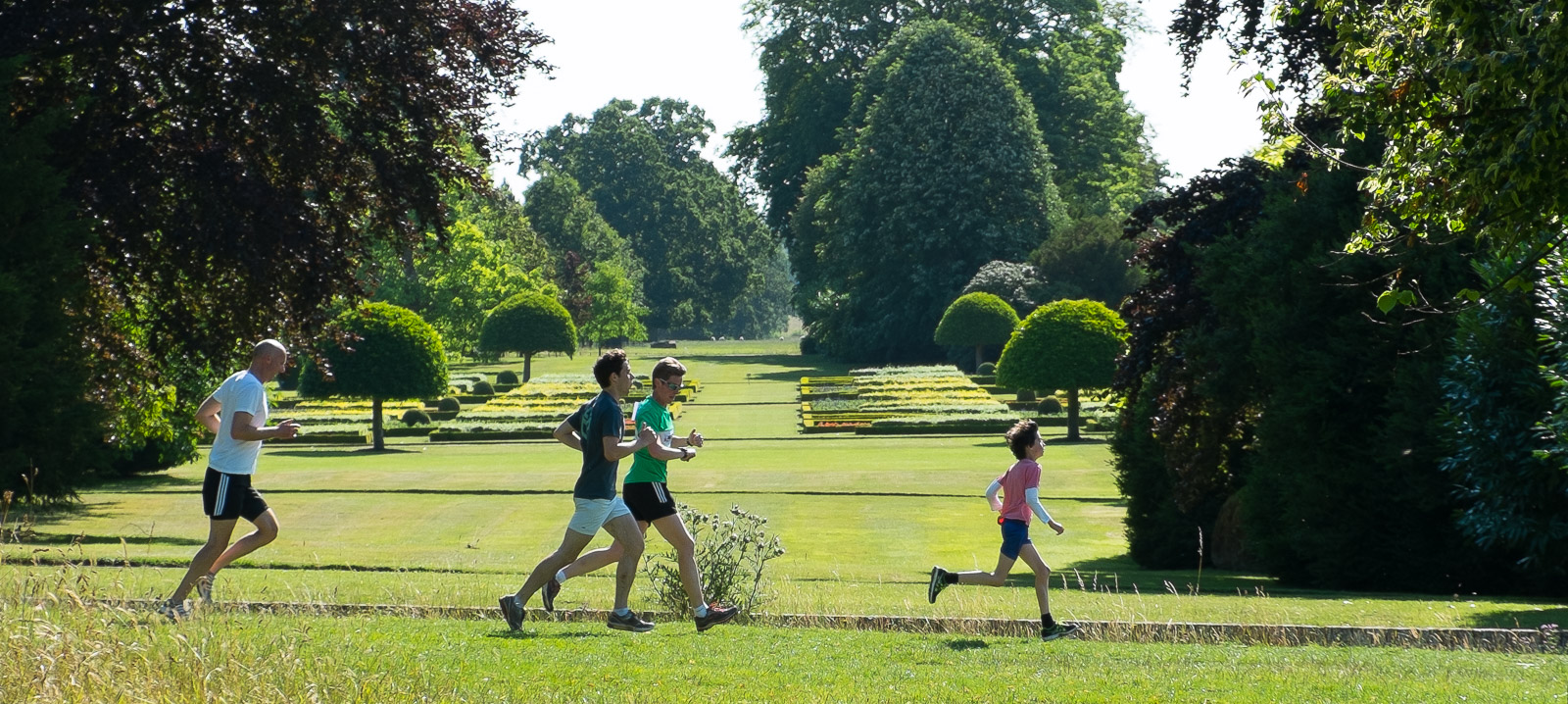
Tilly and I were surprised, when we arrived at Wimpole Hall for our morning walk, to find about three hundred people in brightly-coloured footwear also arriving at the same time. It was some kind of running event.
Though it was a gorgeous morning and location for doing it, this isn't an activity that has ever particularly appealed to me, for two reasons. The first is that I learned at school that I couldn't run to save my life, nor, therefore, partake effectively in any sports which depended on it. This was made clear to me through that strange Darwinian process, peculiar to the school environment, known as Humiliation of the Weakest.
But the second reason is that almost everyone I know who did much running in their youth suffered for it in later life. Running is a system for improving the health of your heart, lungs and arteries at the expense of your knees, legs and feet. This is possibly a trade-off worth making: your life will probably be longer, though you're likely to spend more of it on an electric scooter in your later years. But unless you actually enjoy it, there are better ways to get fit, and that trade-off is only worth making, I would suggest, if swimming or hiking don't appeal!
Still, it does appear to be the fad of the decade. On my morning dog-walks across Grantchester Meadows I encounter more joggers these days than cyclists or other walkers, something which would never have been the case a few years ago. And I think a big part of this must be the advent of phones, watches and fitness bands which bring more immediate gamification to what would otherwise be a somewhat tedious and often solitary activity. You can compete against your devices, even when there's nobody else around, and we humans do respond well to a challenge!
Now, there may be some other reason. I don't really watch TV, so for all I know there may be some popular 'Celebrity Jogging' programme that's been topping the charts in recent years. But, if it is really down to the gadgets, then they aren't going to vanish, so perhaps this isn't just a current trend whose favour will ebb and flow like, say, skateboarding, but a more fundamental and long-term change in the popularity of running.
In which case, it may be time to buy shares in Nike. Or in electric mobility scooters.