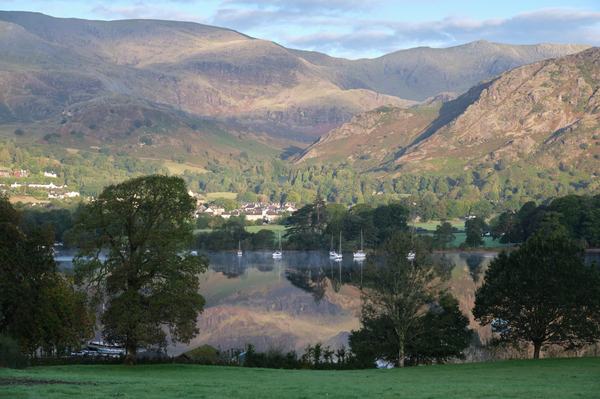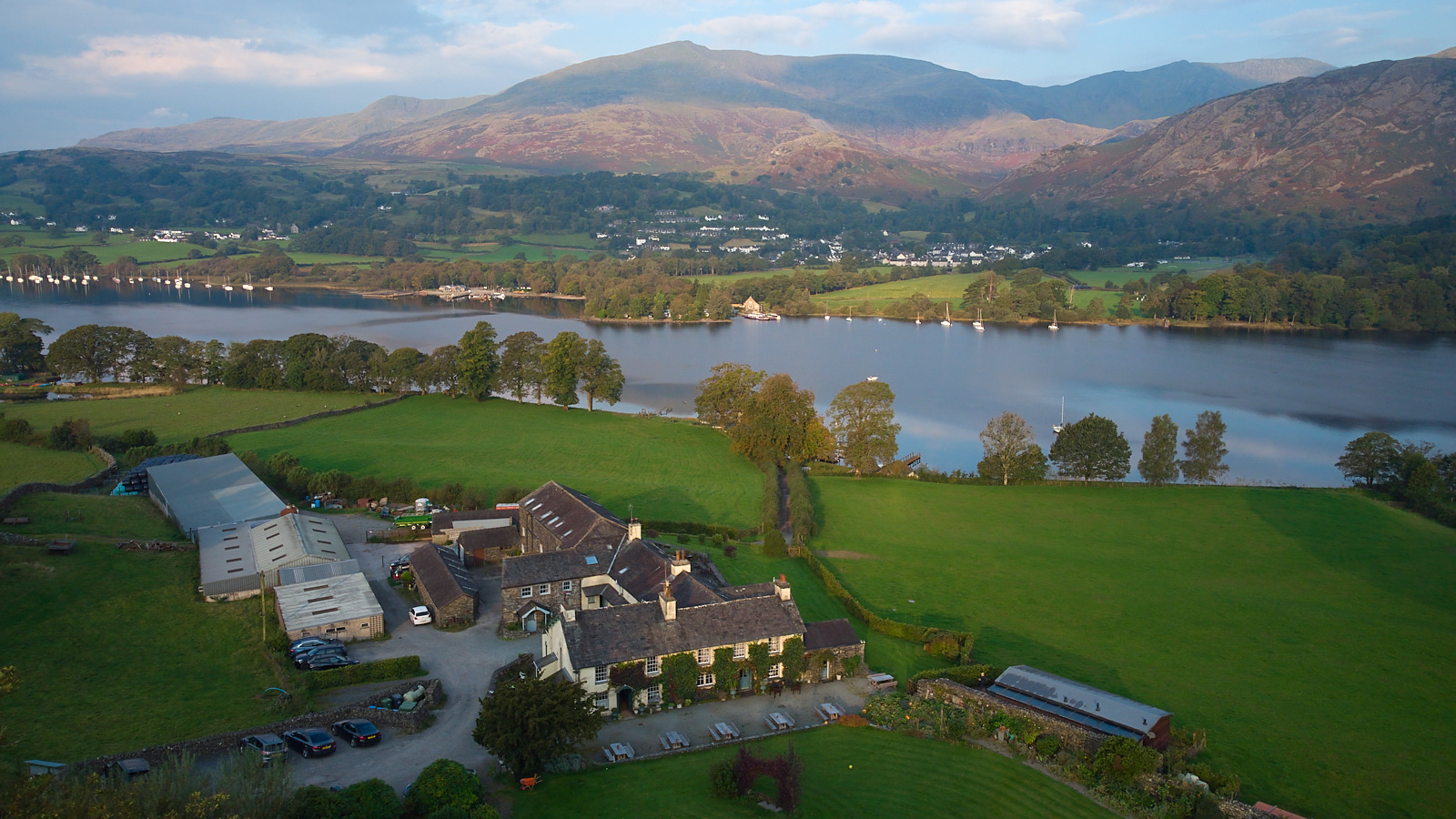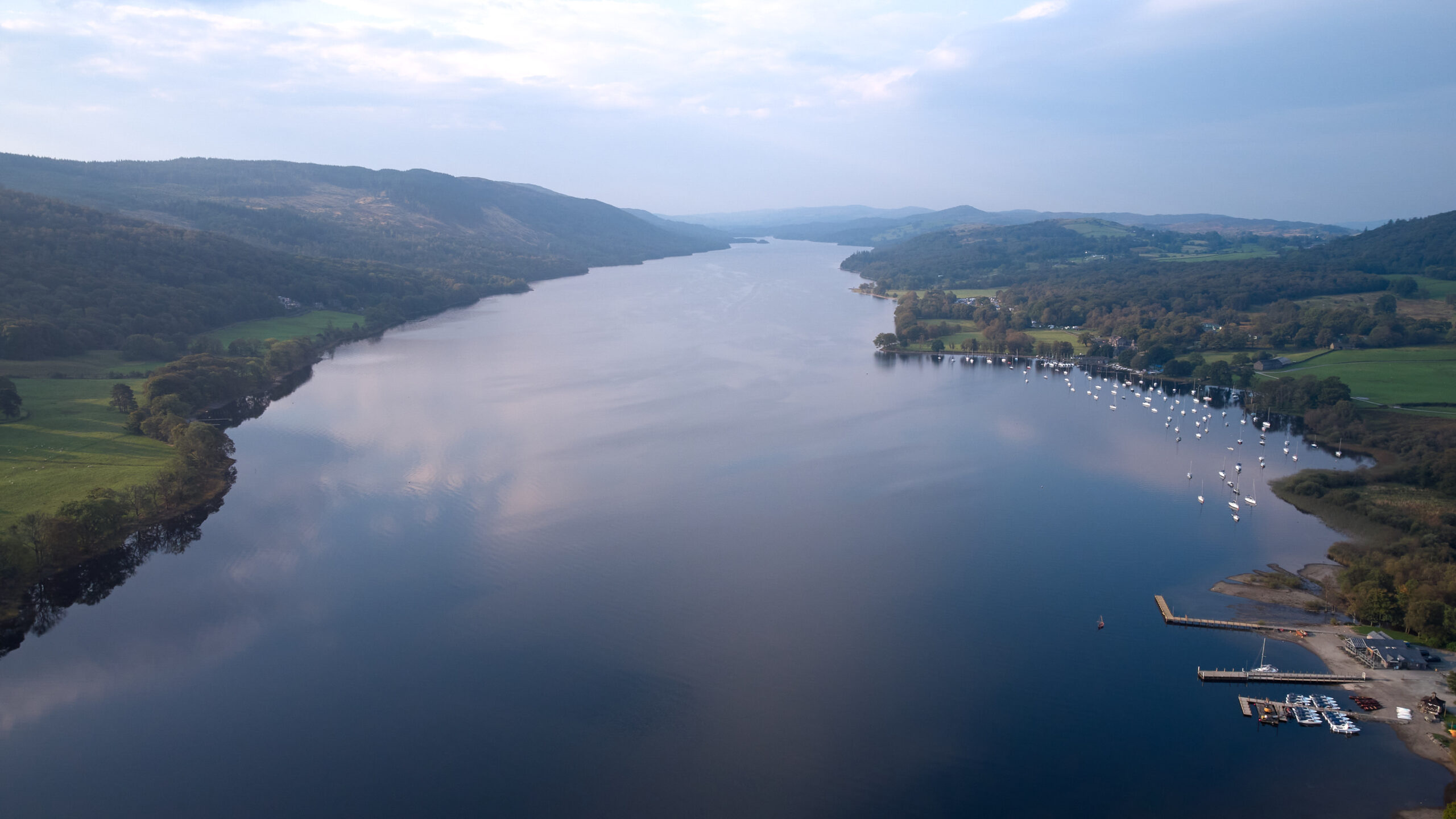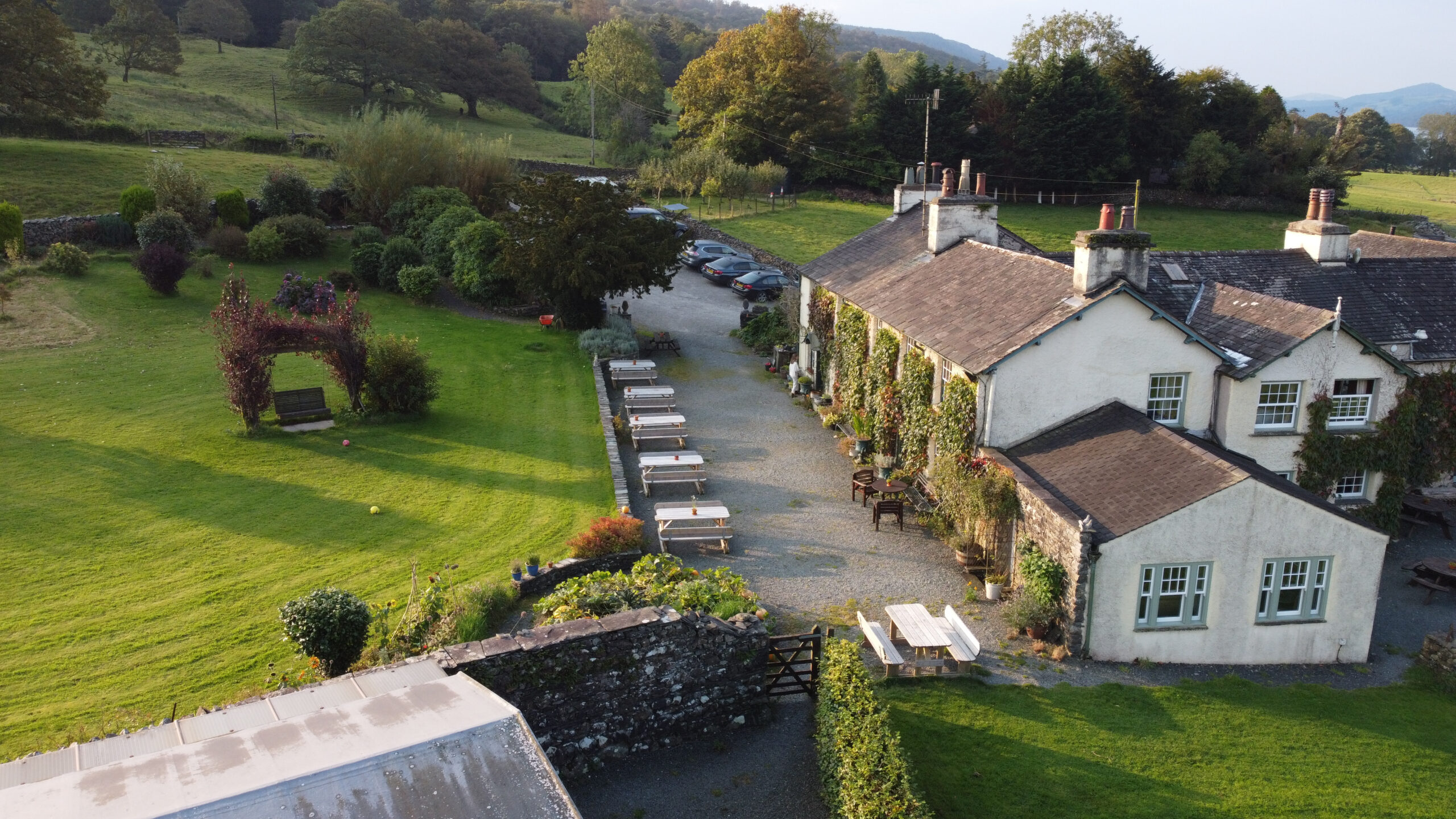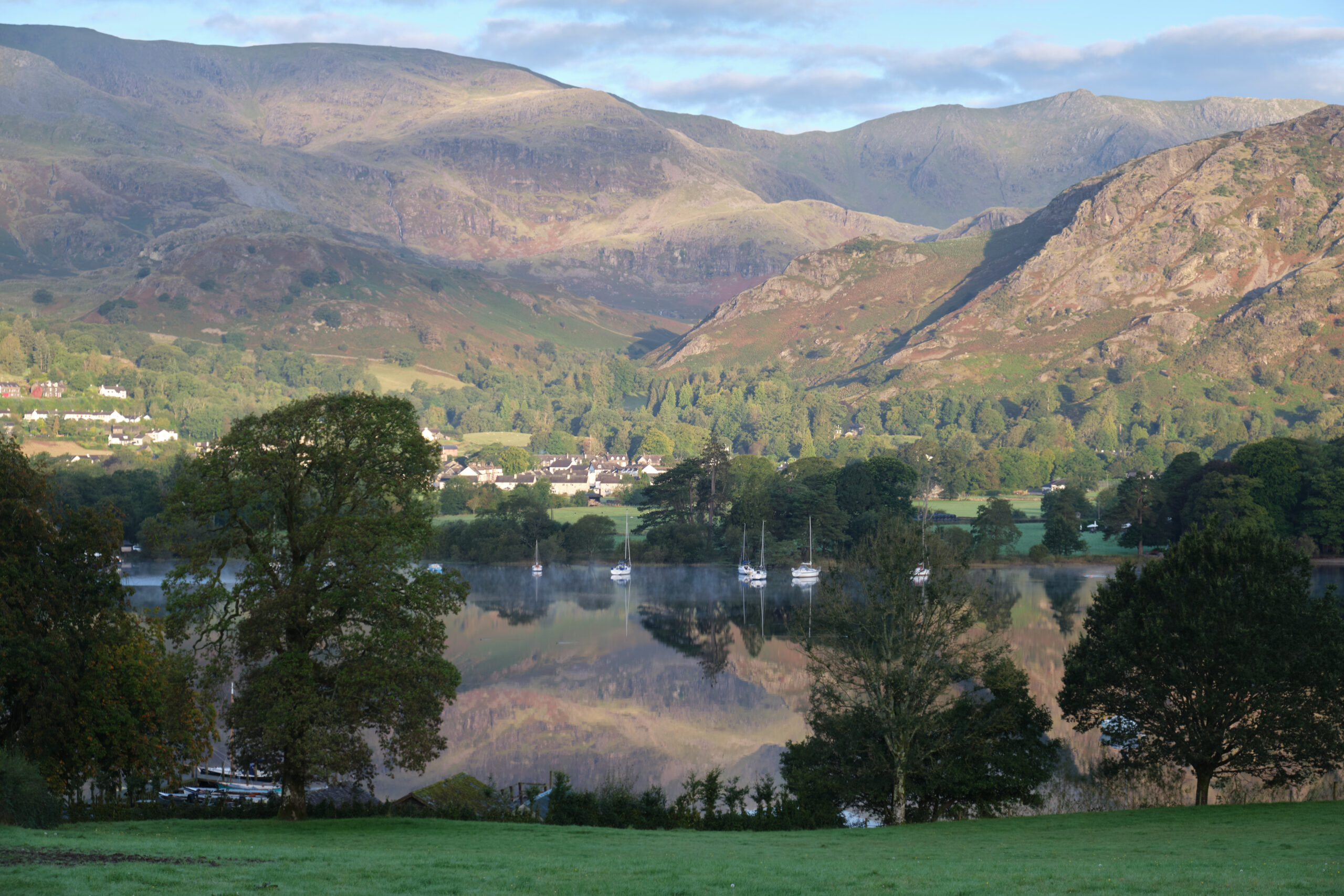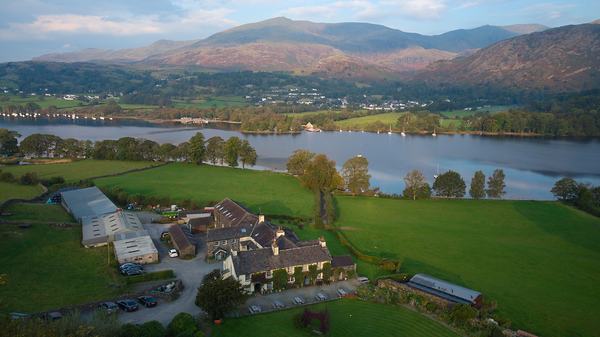
Coniston Water with Bank Ground Farm in the foreground, and the village and the Old Man Of Coniston behind.
(Click images for larger versions.)
Coniston Water, in the English Lake District, is one of my favourite places on Earth. That's partly because it's so beautiful, and partly because it brings back so many memories of happy childhood holidays.
My parents had an elderly caravan which we would often tow 300 miles or so from Hertfordshire, and a favourite spot to park it was at Pier Cottage, the small site roughly in the middle of the photo above on the far side of the lake. On the roof of the car, we would have either our little Mirror sailing dinghy, or a couple of kayaks. Sometimes we even managed to get a couple of bicycles in the caravan too. Most pitches there have a little bit of shoreline, and the distance from the van to the water was about 10 metres.
I remember early one slightly misty morning, my brother and I balanced our bowls of cereal on the front of our kayaks, and paddled out to have breakfast in the middle of the lake, which we had pretty much to ourselves.
I am fortunate to have had a very happy childhood filled with great experiences, but this is seared into my memory as one of the best moments. Other fun activities available from the caravan door included walking around the lake (about 12 miles) or climbing the Old Man of Coniston: the hill in the background (about 2500ft). Only much later did I realise that my parents also probably encouraged such activities so that they could have a bit of time to themselves!
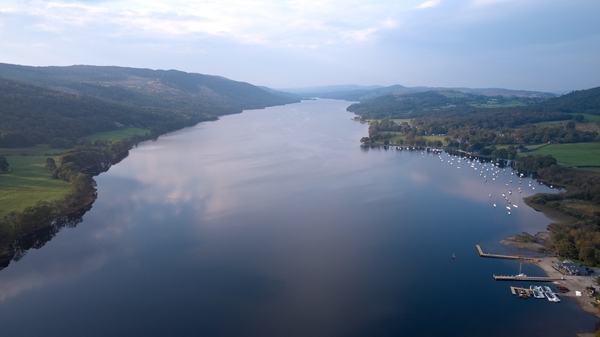
Looking southward down Coniston Water.
I still return to the Lake District most years, but last month, for the first time since my childhood, we were once again taking a sailing dinghy to Coniston. This time it was our Tideway 12, named Shingebis. We weren't, however, camping; we were staying at Bank Ground Farm, on the eastern side of the lake.
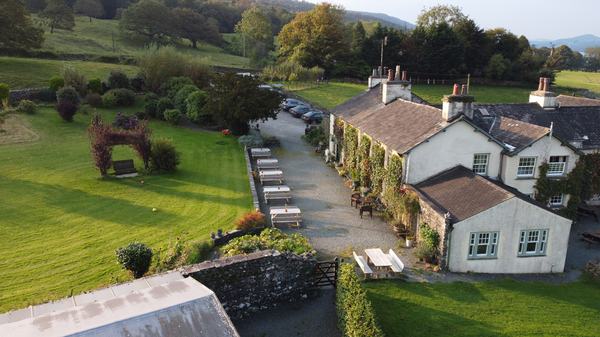
Bank Ground Farm
The farm is famous for being "Holly Howe" in the Swallows and Amazons series by Arthur Ransome -- also an important part of my childhood -- and we've been rediscovering the books as adults... chiefly through the unabridged audiobook versions expertly narrated by Gareth Armstrong. When we're on a long journey, especially towards a nautical destination, they help make the motorways much more enjoyable, and instill a suitable sense of adventure in our travels!
So, on this trip, we were in a very Ransomesque mood, in which I will unashamedly indulge for the remainder of this post, with apologies to those who have not grown up with the same enthusiasms! If you explore the books as an adult, you need to remember that they were written for youngish children, about a century ago, and approach Swallows and Amazons as you might The Railway Children or The Phoenix and the Carpet. If it seems a little tame to you, then try my favourite, We Didn't Mean to Go To Sea, which is a wonderful adventure with real jeopardy.
(And if you're unfortunate enough only to have seen the dreadful 2016 film version, then reformat your brain, install a new operating system, and start from scratch. It is universally agreed among the cognoscenti that the 1974 film, starring Ronald Fraser and Virginia McKenna, is greatly superior.)
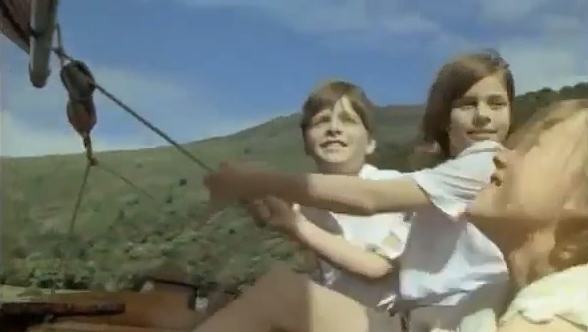 (Click the above image to see the trailer)
Swallows and Amazons, like many of the later books, is set on and around a 'lake in the north', which is a blend of Coniston and Windermere. We were meeting up on Coniston to sail with our friends from the Tideway Owners' Association (TOA), most of whom share our enthusiasm for the books, so we could revel in our escapism!
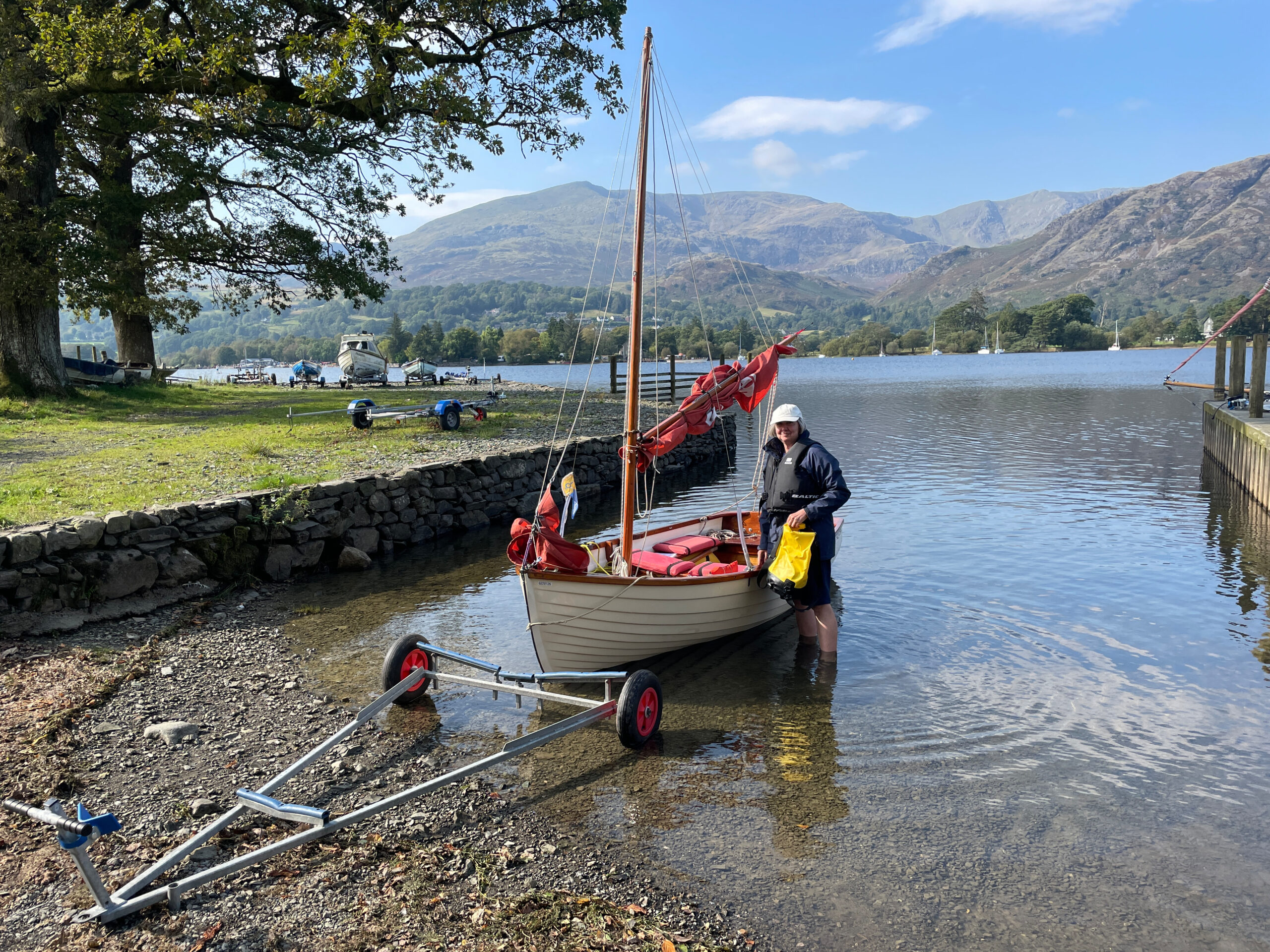
The Walker children arrive at 'Holly Howe' and are staying there when their adventure begins. At the start of the film you see them running across the field, down to the lake, where, once they have paternal approval, they are able to set sail for their adventures in the Swallow. We were staying in a small lodge next to the farm, which is at the top of that same field, and took the same route down to the pontoon where we moored our own boat, Shingebis, for the week, next to the boathouse that once housed Swallow.
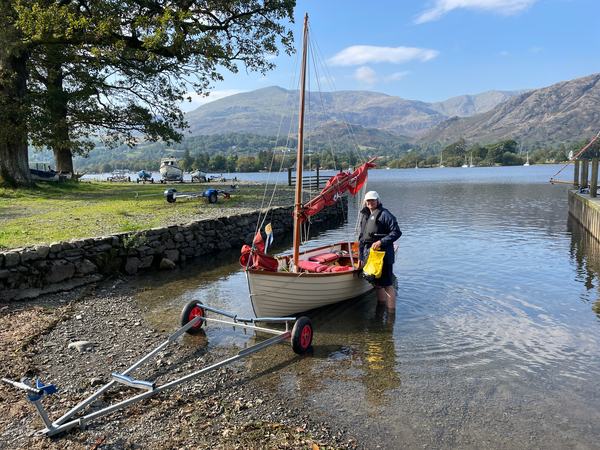
Rose and Shingebis at Bank Ground Farm
Many of the places, and vessels, and some of the people mentioned in the books were real, though often given new names in their fictional form. Amazon, for example, is based on a boat originally named Mavis, which can still be seen in a local museum. But this blurring of fiction and reality is quite fun if you're interested in finding the locations. An excellent introduction, and a good present for any Ransome fans, is Christina Hardyment's "Arthur Ransome & Captain Flint's Trunk".
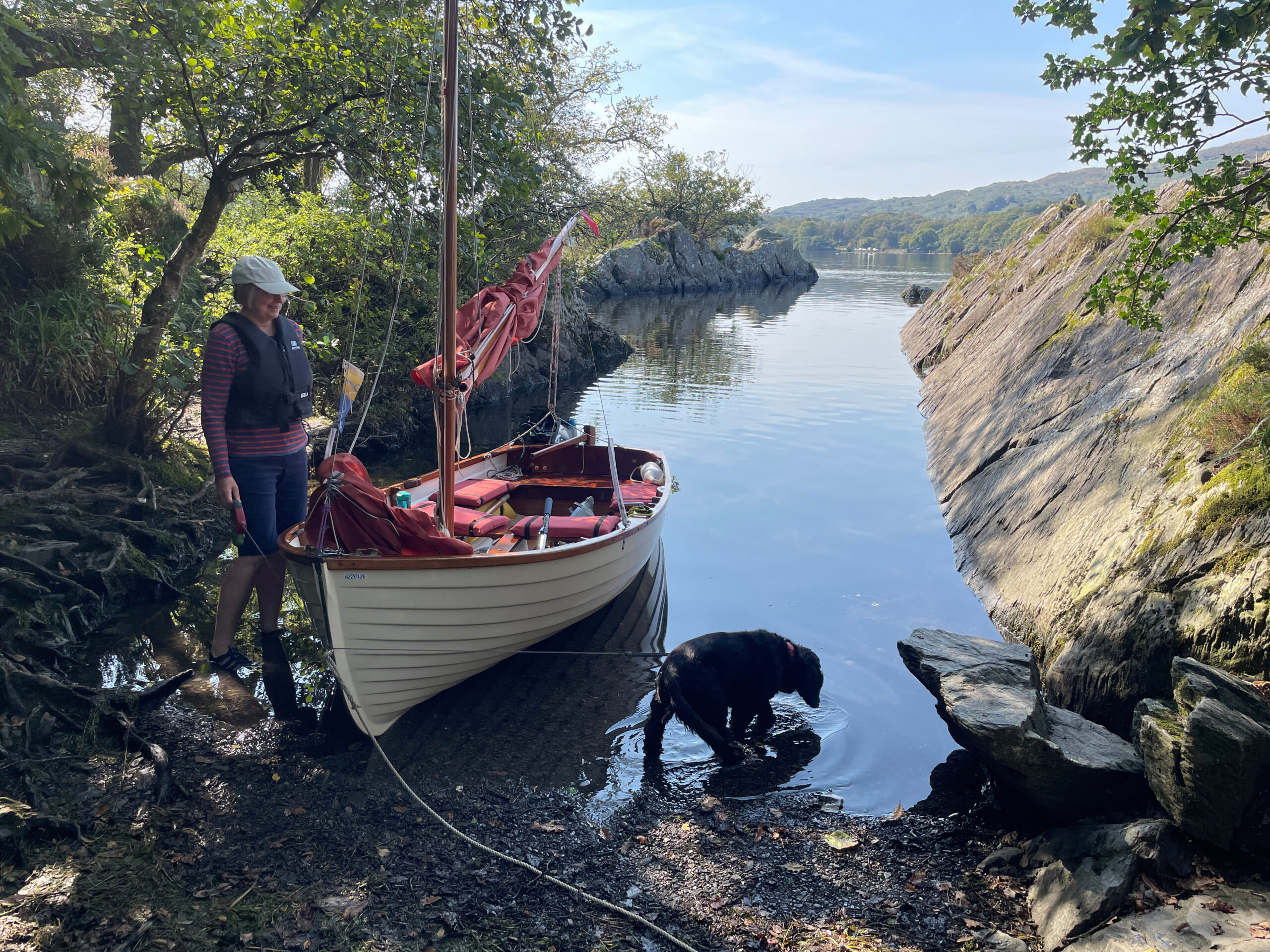
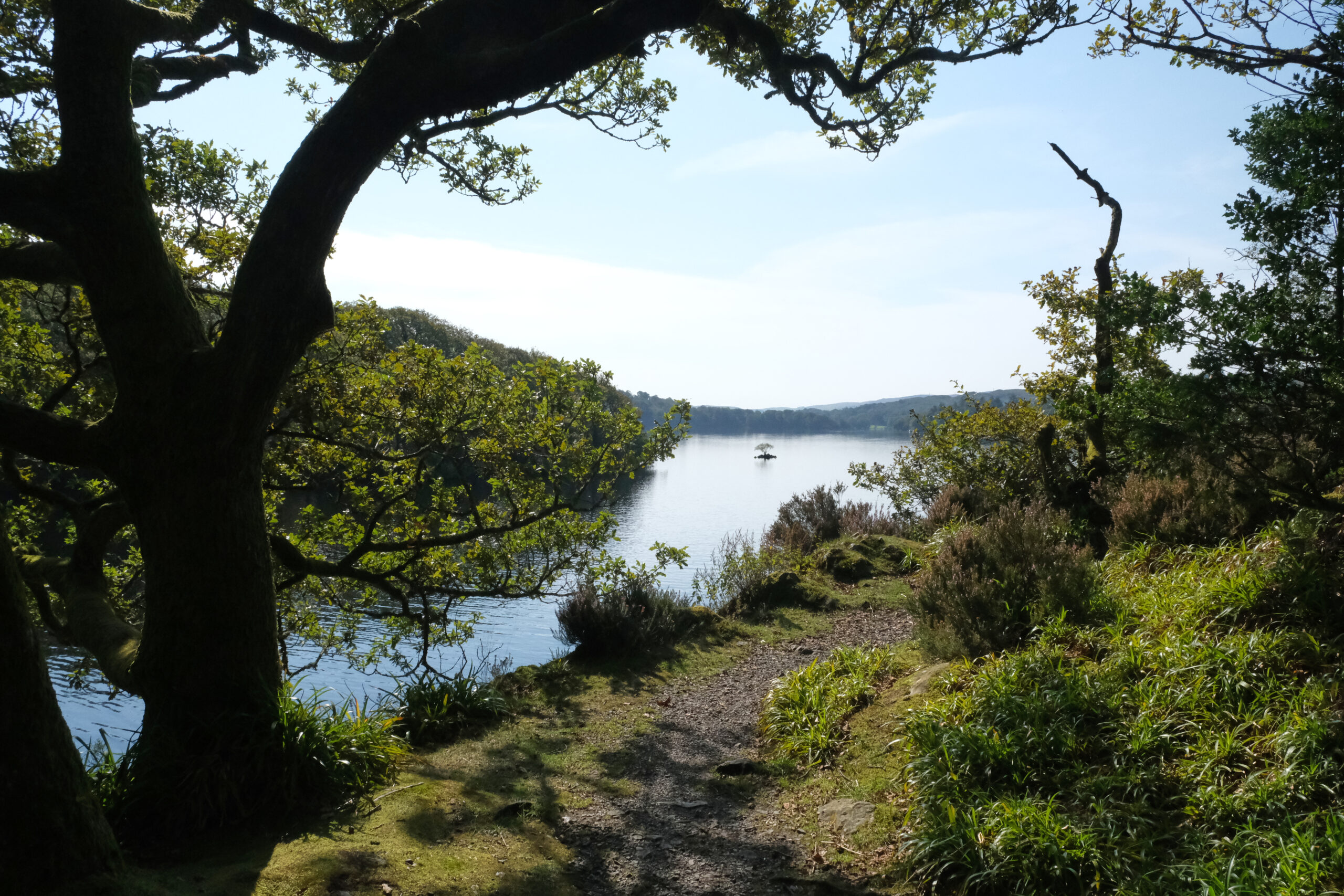
Anyway, if you're setting sail from Holly Howe, one of the first things you have to do, of course, is go and visit 'Wild Cat Island', which is actually a blend of Blake Holme, an island on Windermere, and Peel Island, towards the southern end of Coniston. The famous 'Secret Harbour' is definitely on Peel Island though, and is just as described.
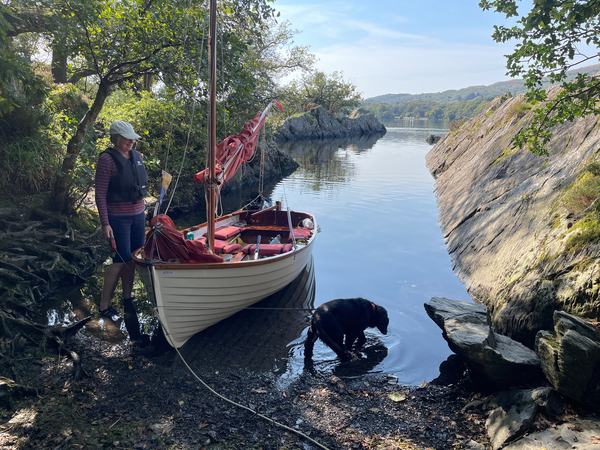
Tilly stops off for a drink in the Secret Harbour.
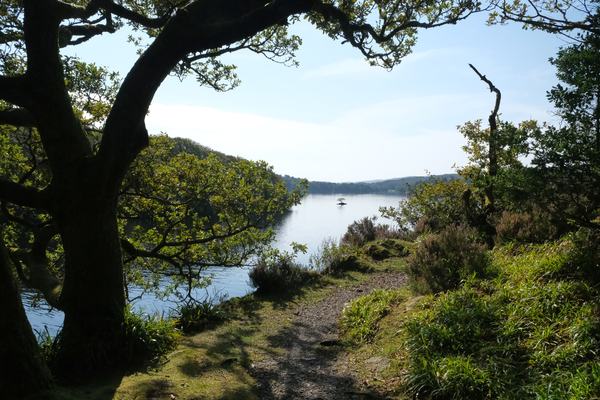
The view south from Wild Cat Island.
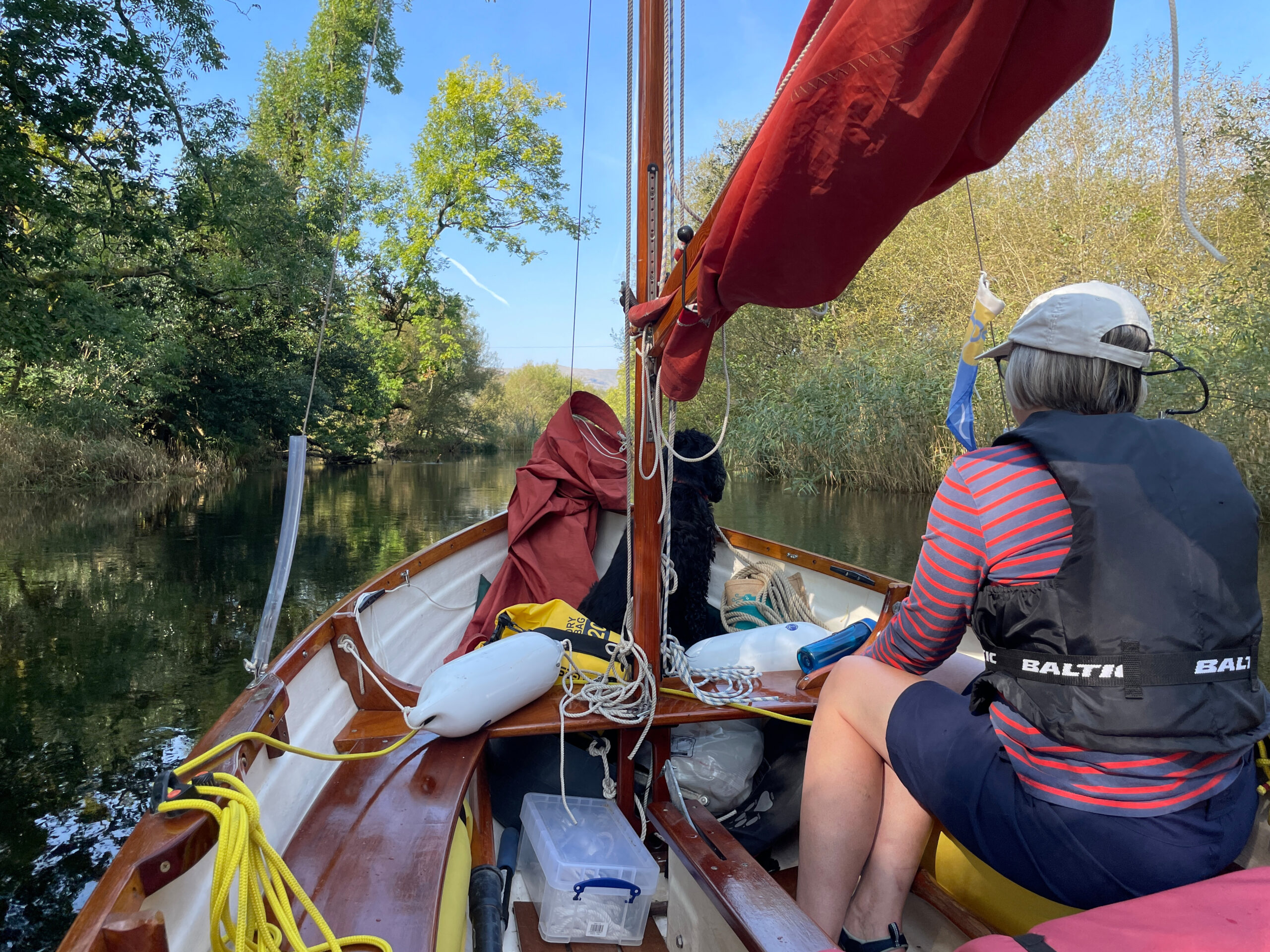
If you carry on to the south end of the lake, you get to 'Swainson's Farm', which really was owned by a family named Swainson who were friends of Ransome's. And here's where the mapping between factual and fictional geography gets a little blurred, because this is where the Amazon's boathouse is, and the river that ought to flow into the lake actually flows out, but it does take you to Allan Tarn, which fans will know as 'Octopus Lagoon'.
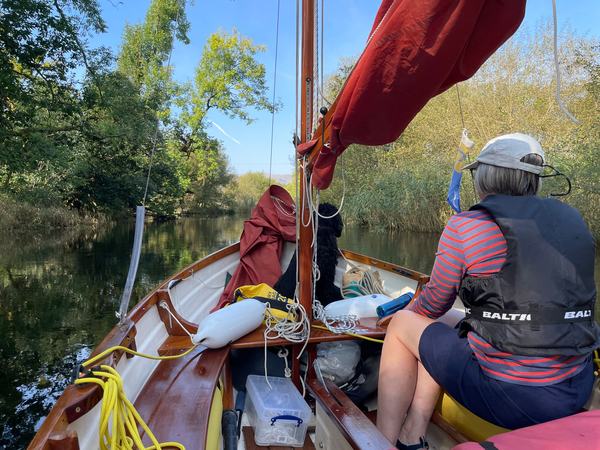
Down the Amazon River to Octopus Lagoon.
The Amazon's crew, of course, lived at "Beckfoot", which, to the extent it exists at all, is probably at the far end of the lake, and possibly actually on Windermere. One can't take these locations too... ahem... literally!
When we returned to the lake, we dropped our anchor in a little bay for a picnic lunch, and then headed back to Holly Howe. There was almost no wind, and so we were adopting a technique I call e-sailing. This is analogous to riding an e-bike, and involves making use of natural power with some assistance from a battery -- in our case, to get us over each glassy patch of still water to the next spot where the light wind was ruffling the surface. This was just as well, since the lake is about 5 miles long and it would have been a long row!
~
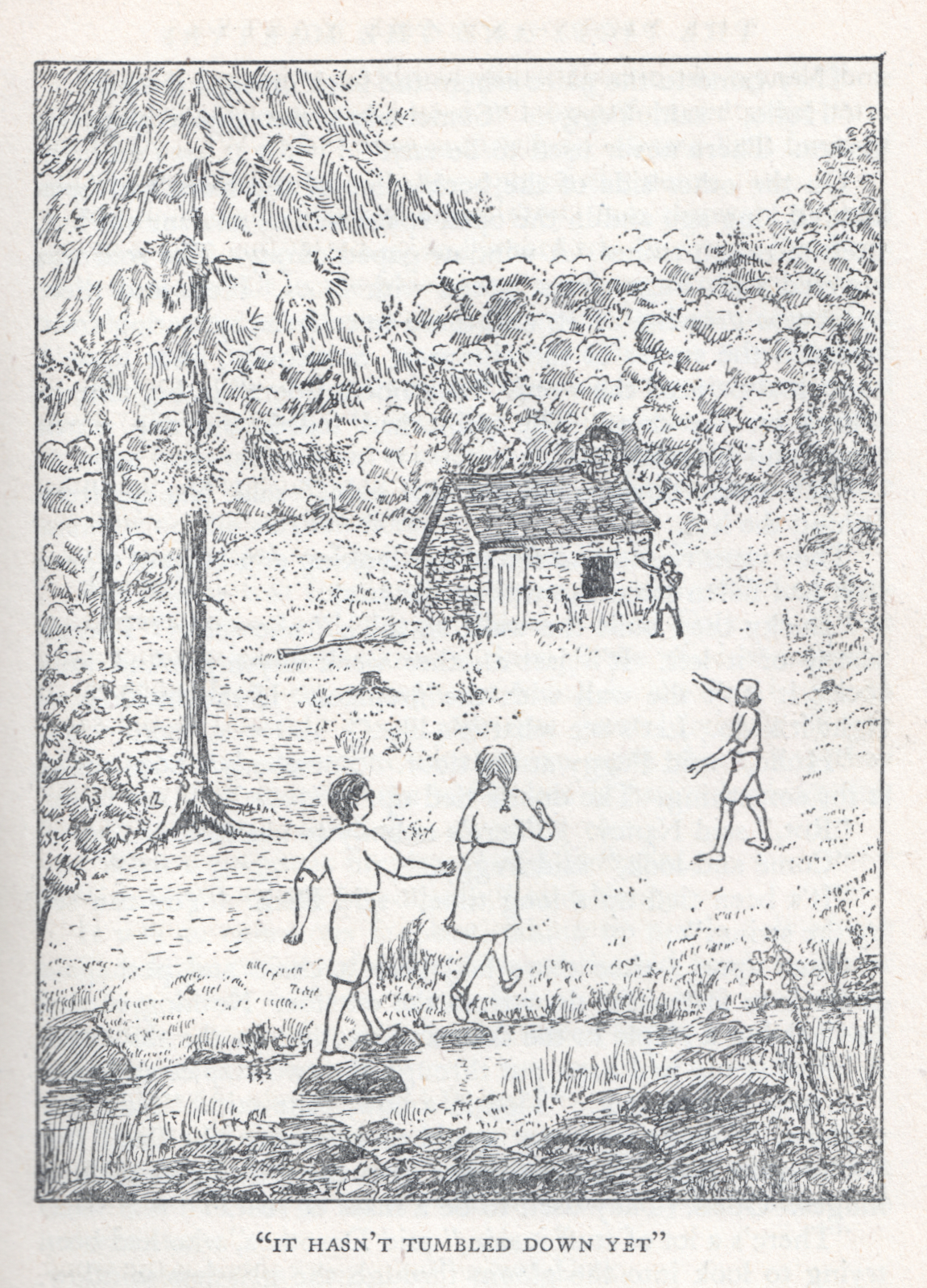
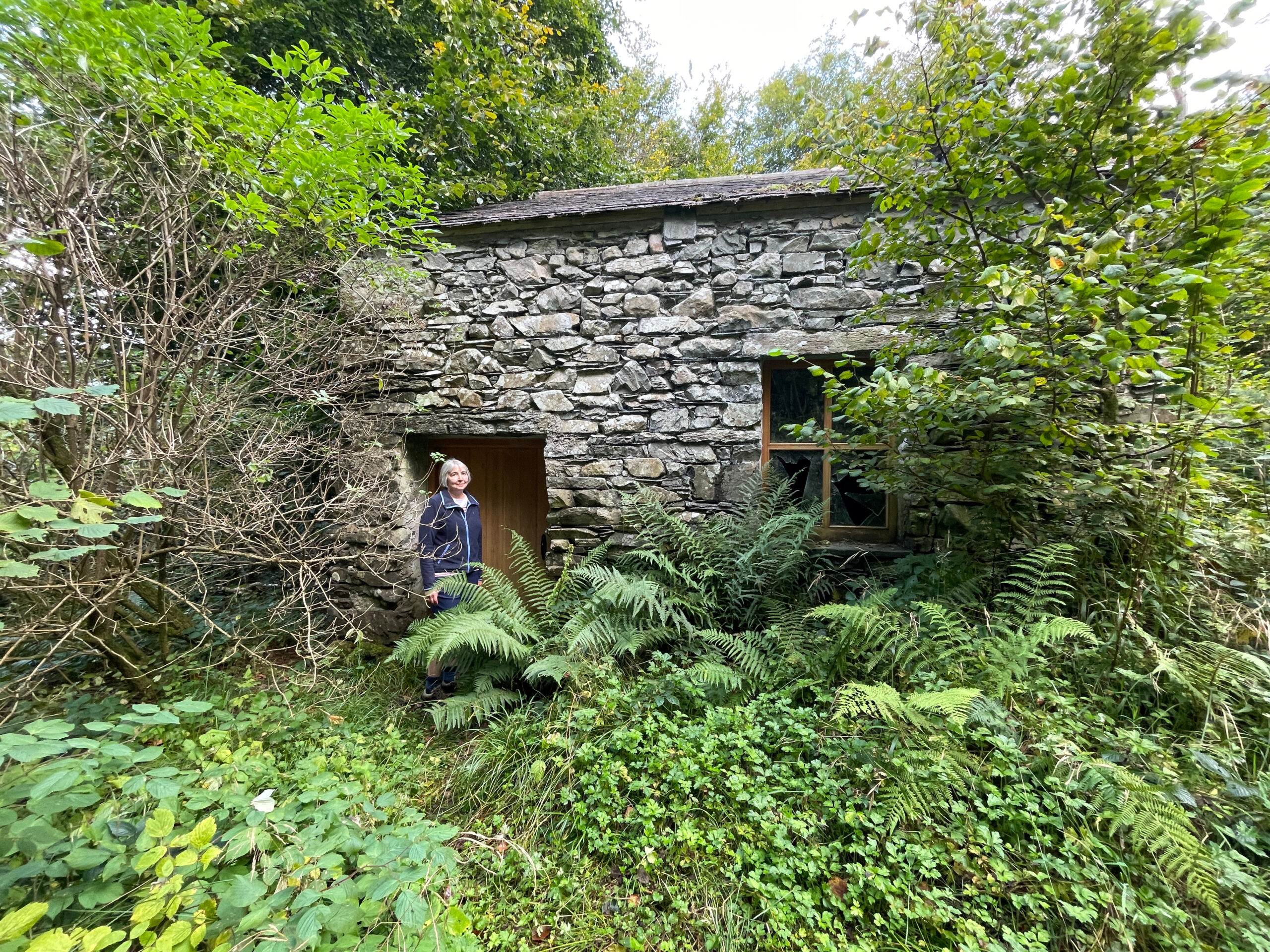
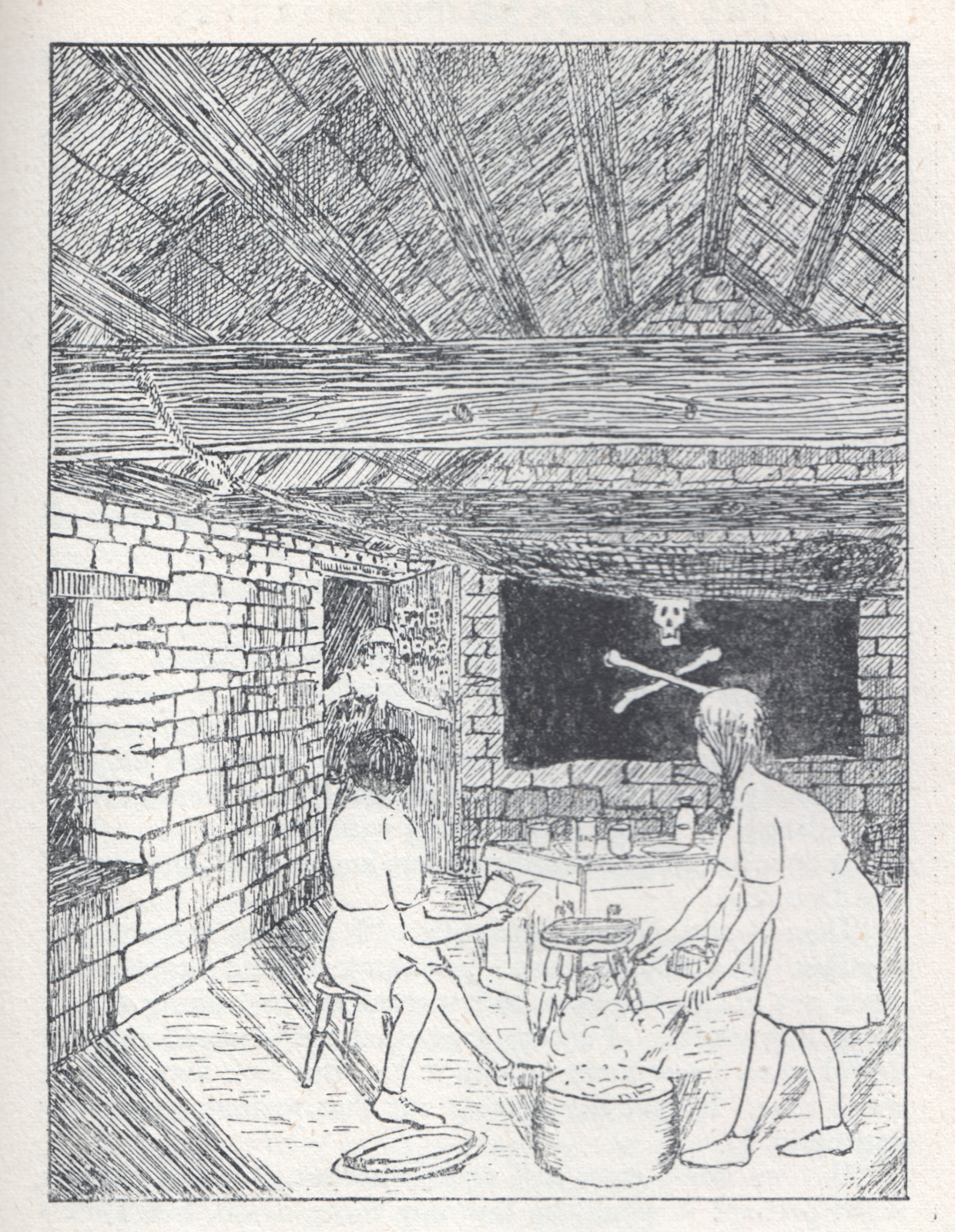
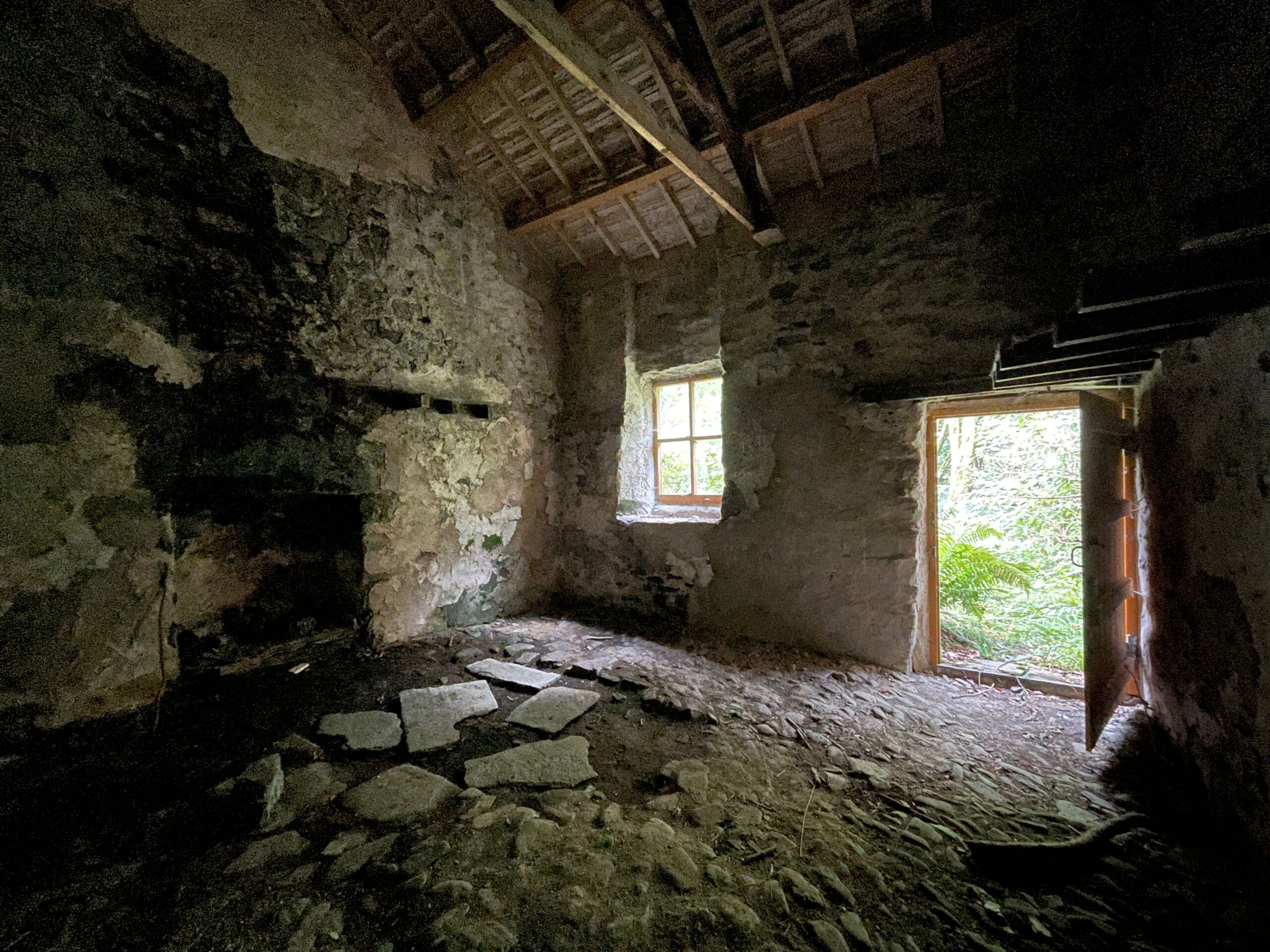
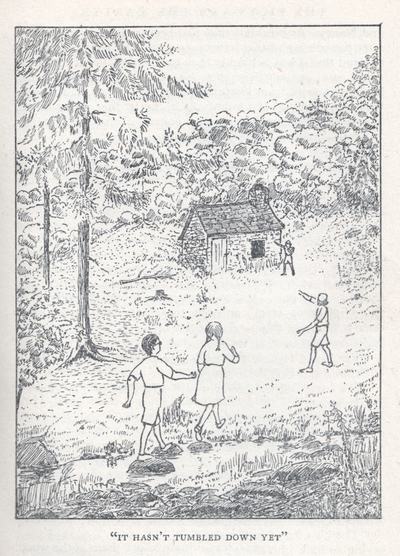
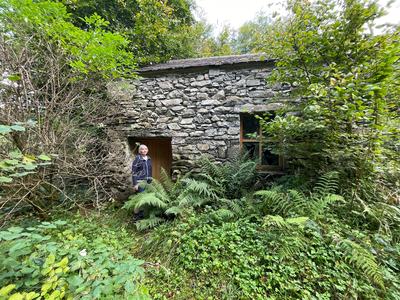
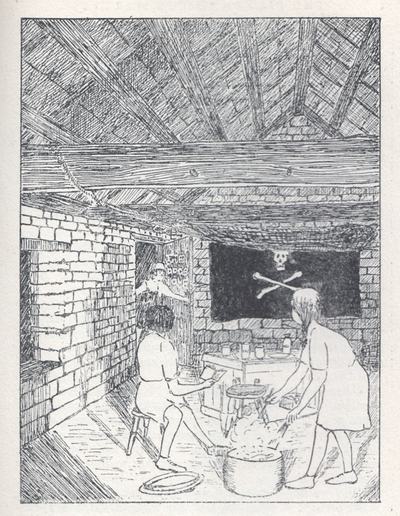
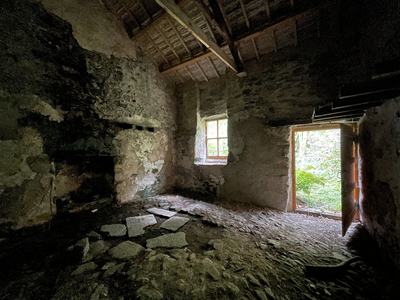
A couple of days later, we continued in the footsteps of Ransome's characters. Hidden up in the woods on the east side of the lake is an old stone hut, which you would never stumble across unless you knew where to look. It featured in The Picts and the Martyrs as the 'Dog's Home", where Dick and Dorothea had to camp for a week and a half to avoid being seen by the Amazons' Great Aunt. Though the surrounding clearing is now somewhat overgrown, as Nancy observed a century ago, "It hasn't tumbled down yet".
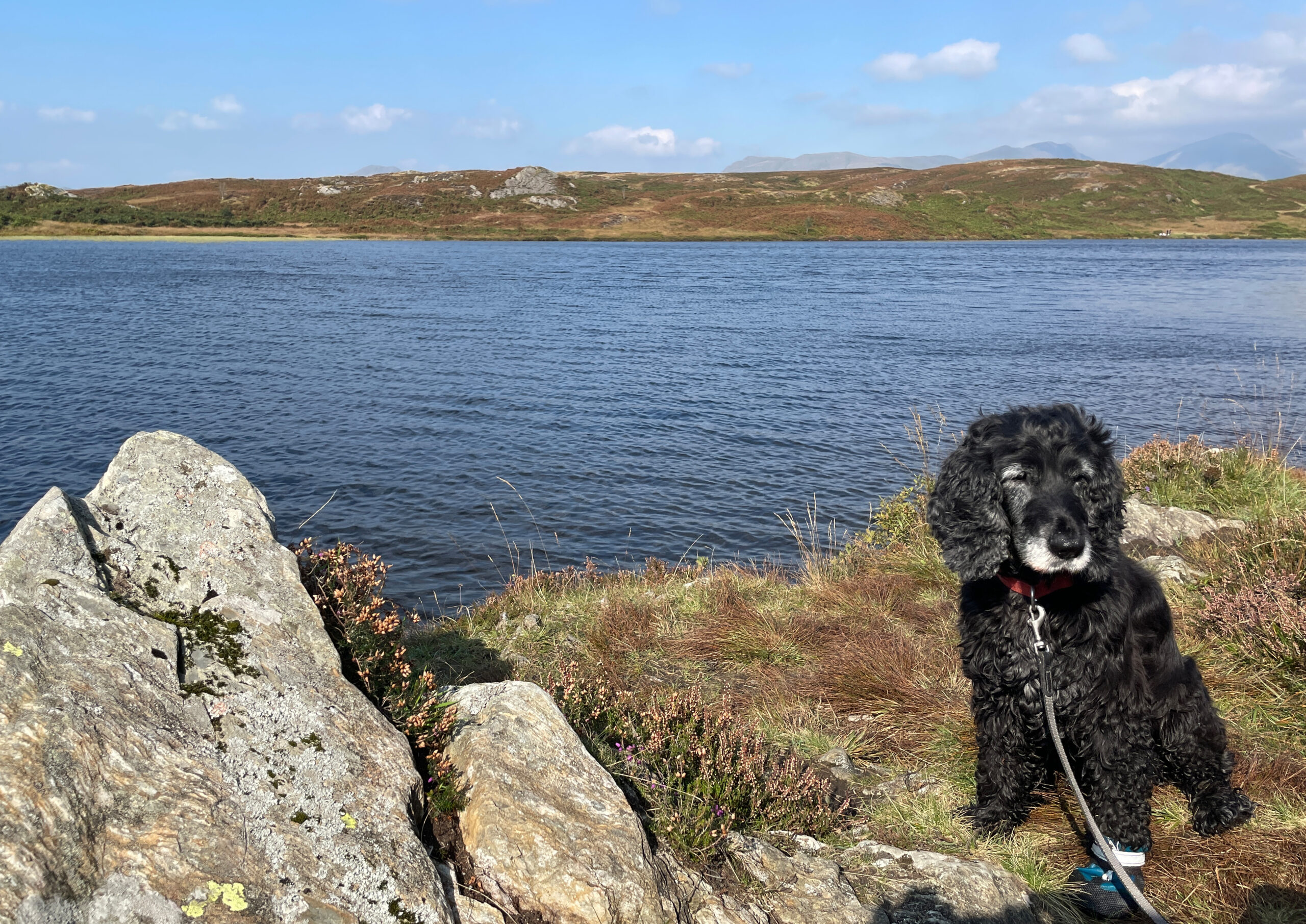
We then went in search of locations from Swallowdale. At the south end of the lake, we crossed the 'Amazon river' we had previously explored by boat and reached the little hamlet of Water Yeat, where we parked and walked up a lovely road past the prettily-situated Greenholm Farm. The road became a track, and eventually took us to Beacon Tarn. We know from Ransome's notes that this was where Roger caught his trout in the book, and so became 'Trout Tarn'. Nearby, there was a vary plausible candidate for the 'Lookout Rock'. In the distance we could see the peak of The Old Man of Coniston, which I have climbed many times. The children in the book christen it 'Kanchenjunga', and they set out from Swallowdale across 'High Moor' to climb it. We took the more relaxed option of sitting beside the tarn enjoying a picnic, but as we did so, some of our more energetic TOA friends had just reached the summit.
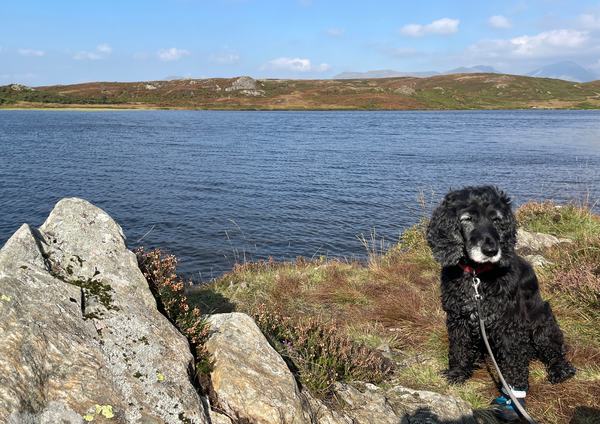
The Ship's Dog at 'Trout Tarn', with 'Kanchenjunga' in the distance.
A true location for the little valley named 'Swallowdale' has never really been established. It is meant to be on the beck flowing out of the tarn, but no such spot exists here. Ransome once said, tantalisingly, that all the places in the books exist somewhere, but this he must have transported from another location. Still, as readers will know, one of the primary attractions of Swallowdale was that it was almost impossible to find!
~
The following days held more sailing and walking with friends, and, given that the Lake District is one of the rainiest places in Britain, we got to the end of our trip astonished that we'd had an entire week there in September without any precipitation and, in fact, requiring the application of a considerable amount of sun cream! We'd also had a splendid time exploring the boundaries between fact and fiction, between childhood and adulthood.
As we fastened the cover over Shingebis on her trailer, ready for the drive home, raindrops started to fall, and the entire journey thereafter was in a downpour: a curtain through which we passed as we left that magical world and returned to reality.
But we can easily go back again in the future. Perhaps even just by picking up a book.